Loading market dashboard

ROBO Global Artificial Intelligence ETF
THNQFinancial ServicesAMEXUS
Loading disclosure news
News and disclosures filtered by period, publisher, and event group.
Select a headline to open the full news page in the app.
Investors once shrugged off industrials as slow-growth cyclical businesses that lagged tech at every turn. But the AI boom has driven a significant re-rating of the sector.
Space ETFs have seen strong inflows coupled with standout performance, capturing significant market attention. For investors, the rapid pace of capital deployment into the space economy underscores a compelling investment opportunity.
The AI trade keeps broadening across the stack, and the last few weeks have delivered a dense run of news.
Artificial intelligence is advancing beyond standalone large language model (LLM) demonstrations and shifting into AI agents. However, there needs to be a solution for an enterprise-grade control plane before corporations can scale these autonomous agents from demos into live production.
The robotics industry is undergoing a fundamental shift. While industrial automation has historically been the exclusive domain of large corporations with substantial capital budgets and in-house expertise, a new framework is emerging.

Sometimes it feels like it's Nvidia's world, and we are all just living in it. As we brace for the firm's latest earnings report coming Wednesday, we could say that Nvidia (NVDA) earnings — and more importantly, its forward guidance — have become much more than a par-for-the-course quarterly disclosure.
Key Takeaways: Anthropic's Project Glasswing, an industry-wide initiative built around the restricted-access Claude Mythos Preview model, is bringing frontier AI into vulnerability discovery at scale, with 12 launch partners and more than 40 additional organizations participating.
Jensen Huang has spent the past year saying the next artificial intelligence (AI) boom will land in factories, warehouses, hospitals, and on highways, where AI gets a body.
Physical AI is rapidly moving from science fiction to investable reality, poised to reshape the real economy far beyond data centers and software. Speaking during the Q2 Market Outlook, VettaFi Research Analyst Rafael Silva defined physical AI as “artificial intelligence that steps off the screen and into hardware.

The Q2 Market Outlook Symposium, Defining the Quarter Ahead, held on April 30, 2026, brought together industry leaders to dissect the evolving macroeconomic landscape and highlight sophisticated strategies for the modern portfolio.

Intel's comeback highlights valuation risks. AI ETFs look pricey -- here are relatively lower P/E options investors can consider now.
During the VettaFi Asset Allocation Summit in April, advisors told VettaFi about their strong interest in thematic ETFs. More than a third (35%) of attendee respondents said they expect to add to thematic ETFs in the next three months.
The robotics industry stands at a transformative inflection point, where machines are evolving from rigid, pre-programmed tools into adaptive systems enabled by liquid neural networks.
The artificial intelligence theme is entering a more granular phase, with investors increasingly looking beyond foundational large language models (LLMs) toward the physical infrastructure required for scale. The ROBO Global Artificial Intelligence ETF (THNQ) has captured this shift effectively, posting a total return of 9.
The debate over whether artificial intelligence has entered bubble territory has reached a fever pitch. For this edition of Bull vs Bear, writers Nicholas Peters-Golden and DJ Shaw discuss the disconnect between infrastructure spending and software revenue.
The convergence of artificial intelligence and physical manufacturing is creating a unique offensive and defensive investment profile for the robotics sector, according to Zeno Mercer, Head of Robotics and AI Research at VettaFi. Key Takeaways Projects are validating the shift from digital AI to physical manufacturing, aerospace, as well as defense applications.
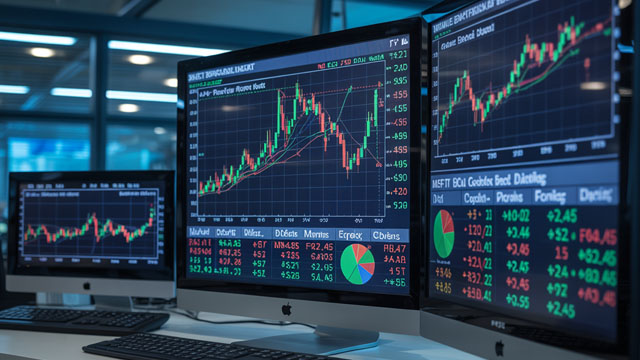
Investors are starting to understand that robotics and AI each represent an industry of industries. Not a sector.
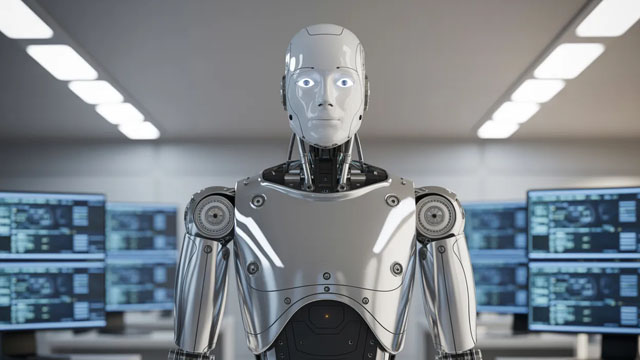
The robotics and automation industry is currently navigating a significant inflection point. Once characterized by specialized industrial applications, it's transitioning now to a pervasive industry of industries.