Loading market dashboard

VanEck Semiconductor ETF
SMHFinancial ServicesNASDAQUS
Loading disclosure news
News and disclosures filtered by period, publisher, and event group.
Select a headline to open the full news page in the app.
Inflation relentlessly erodes purchasing power, making dividend growth essential for income investors to maintain real income. A barbell strategy—combining moderate-yielding dividend growth stocks/ETFs and 6.5%+ yielding investment grade preferreds—offers both growth and current income. AI-driven capex by large-cap S&P 500 firms is powering economic growth and masking weakness among lower-income consumers.

May was the strongest month of the year for buying by retail investors, as individuals piled into semiconductor stocks.
The top-performing non-leveraged ETFs of 2026 span a distinct blend of digital assets, next-generation semiconductor technology, and localized international equity plays. For advisors assessing portfolio allocations heading into the second half of the year, these performance figures highlight a sustained risk-on appetite among investors.

Dan Niles, Niles Investment Management, joins 'Power Lunch' to discuss Niles' investing take on the semiconductor sector, the market sentiment on the sector and much more.

Although 2026 has been a roller coaster year for the markets so far, certain sectors have remained strong.
The AI ETF industry evolves beyond broad semiconductor funds into new niche AI layers that include Photonics, Neocloud, and Compute Futures.

Tech ETFs with heavy exposure to NVDA gain attention, as the company enters the PC market with its RTX Spark AI superchip.
The drastic shift of memory chips to artificial intelligence data centers could lead to dramatic price hikes in consumer goods and disrupt supply chains, groups representing automakers, retailers, electronic firms and others said Wednesday.

The nature of AI demand for semiconductors is subtly changing, but that's still great news for this ETF.

The proposals include a new act to bolster advanced chip manufacturing and homegrown cloud computing.

The European Commission proposed new laws on Wednesday to boost domestic cloud, AI and semiconductor industries, aiming to cut reliance on U.S. Big Tech in a move that could ratchet up transatlantic tensions.
Broad market indexes have surged over the last few months, with semiconductors leading the charge.

Iran peace talks face fresh risks as oil surged on Monday. ETFs tied to energy, commodities, income, the dollar and AI could help navigate volatility.

[url="]VanEck[/url] is today launching the [url="]VanEck Data Center Supply Chain ETF (CBOE: RACK)[/url], to provide pure-play exposure to the companies poweri

Democratic Senator Elizabeth Warren is calling on the Trump administration to close a "loophole" that has potentially allowed advanced American AI chips to be sent to overseas units of Chinese firms, according to a statement seen by Reuters. Warren, who serves as ranking member on the Senate Banking Committee, also urged Commerce Secretary Howard Lutnick to testify on the issue.
Iran deal hopes, AI-fueled tech gains and Dell's upbeat outlook lifted stocks to record highs, while inflation fears and space-stock volatility persisted.

Matthews Asia's Sean Taylor explains why he remains constructive on China despite the broader indexes lagging some high-performing sectors. He also outlines his South Korea strategy, including an overweight call on chipmakers balanced by exposure to industrials.

After three years of hyperscaler capital spending feeding through to chip designers, foundry capacity, and lithography backlogs, the semiconductor ETF complex has separated into distinct buckets.

Thomas Poullaouec, Head of Global Investment Solutions, International at T.Rowe Price, says he does not foresee a slowdown in the demand for memory chips despite rising prices.
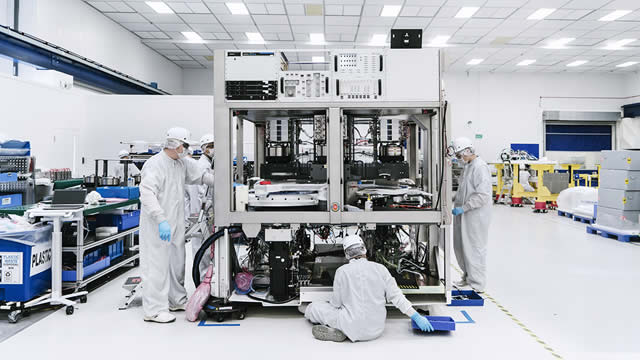
Huawei's new chip design principle focused on boosting transmission speed rather than continuing to shrink semiconductors offers a path for China to build cutting-edge chips despite U.S. sanctions, though whether it represents a true breakthrough remains to be seen.

Applied Materials CEO Gary Dickerson said the semiconductor industry is experiencing its strongest period ever. He said artificial intelligence is driving unprecedented computing demand and long-term growth.
High-bandwidth memory has become the choke point in the AI buildout, as NVIDIA's Blackwell accelerators rely on stacked DRAM modules that only three companies can produce at scale, and the order books for those modules are reportedly stretching past 2027.

Shares of chipmakers are rallying this year While the AI spending boom is fueling big gains for lots of tech companies, it's the semiconductor makers that are truly in the chips these days.

The artificial intelligence (AI) revolution has expanded to include many tech companies. But the industry's leaders are likely to drive growth over the next several years.
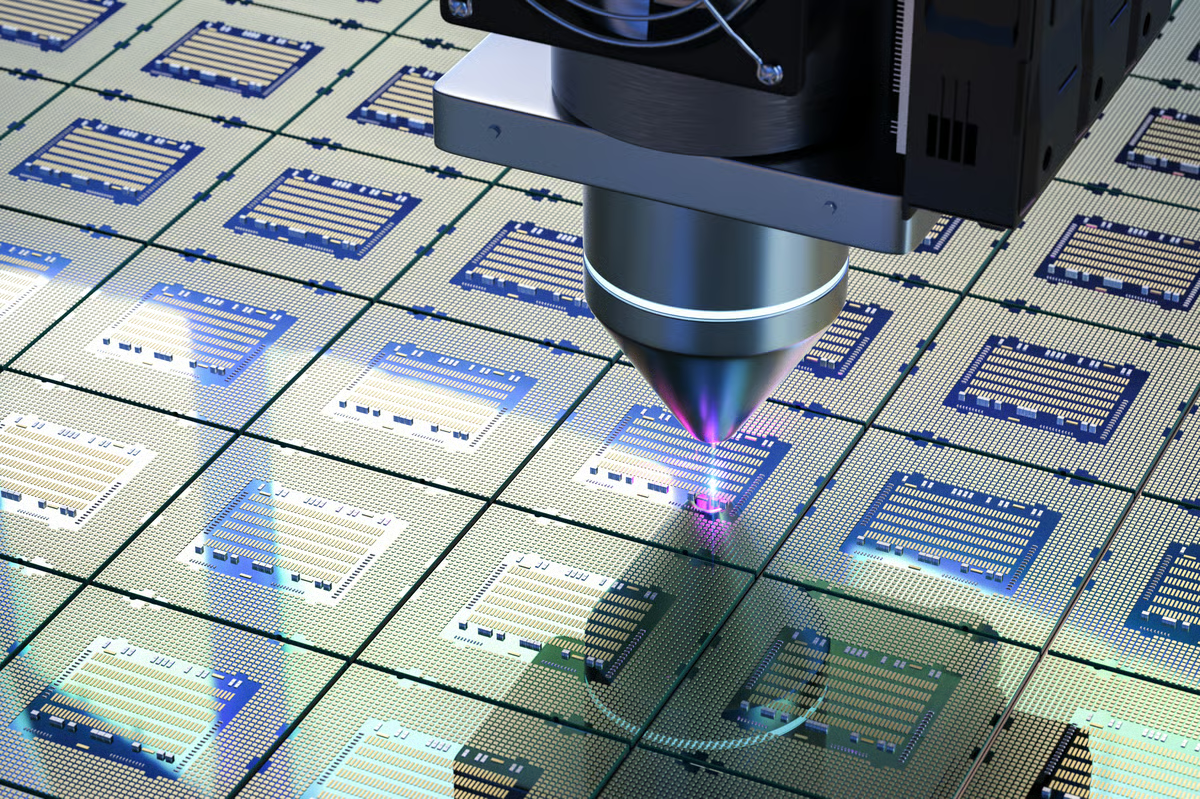
Surging demand for chip makers has lifted major indexes from their wartime malaise.

Source: TradePulse | May 27, 2026

Commercial U.S. solar customers are seeing installation costs spike as the war in Iran chokes supply of aluminium and makes racking systems more expensive, compounding financial pressures on an industry already grappling with elevated silver prices.

Japan's Nikkei 225 climbed to a record high on Wednesday, as a rally in semiconductor shares outweighed weakness in banks and real estate stocks. The benchmark index rose 1.25% to 65,811.78 as of 0147 GMT, after touching an intraday high of 66,428.81.

Micron's (MU) AI memory rally is boosting chip ETFs and AI infrastructure funds with exposure to Micron, Nvidia and the booming HBM market.
The index remains in a broader uptrend, but near-term upside looks limited as it approaches a 5th-wave peak, with a likely deeper retracement ahead before resuming higher over the long term.

Shares of Micron Technology (NASDAQ: MU) are up 12% to $843 after UBS raised its price target on MU stock to $1,625 from $535. The firm maintained its Buy rating, and the new figure now stands as the most bullish target on Wall Street. The magnitude of the raise is the story. UBS analyst Timothy Arcuri... Micron Jumps 12% After Price Target Raise From $535 to $1,625: Here's What's Driving Wall Street's Most Bullish Target
The VanEck Semiconductor ETF (SMH) offers compelling growth, with 2026 EPS forecasted over 100% and a favorable 0.6x PEG ratio. Global X Cybersecurity ETF (BUG) faces AI-driven disruption, with 2027 EPS growth at 32% but a premium 2x PEG and top holdings over 3x PEG. Consensus price targets indicate limited upside for both ETFs, with SMH at 4% and BUG near zero, suggesting market overvaluation or underestimated earnings growth.
Semiconductor stocks have been red hot over the past few years. Just how hot might surprise you.
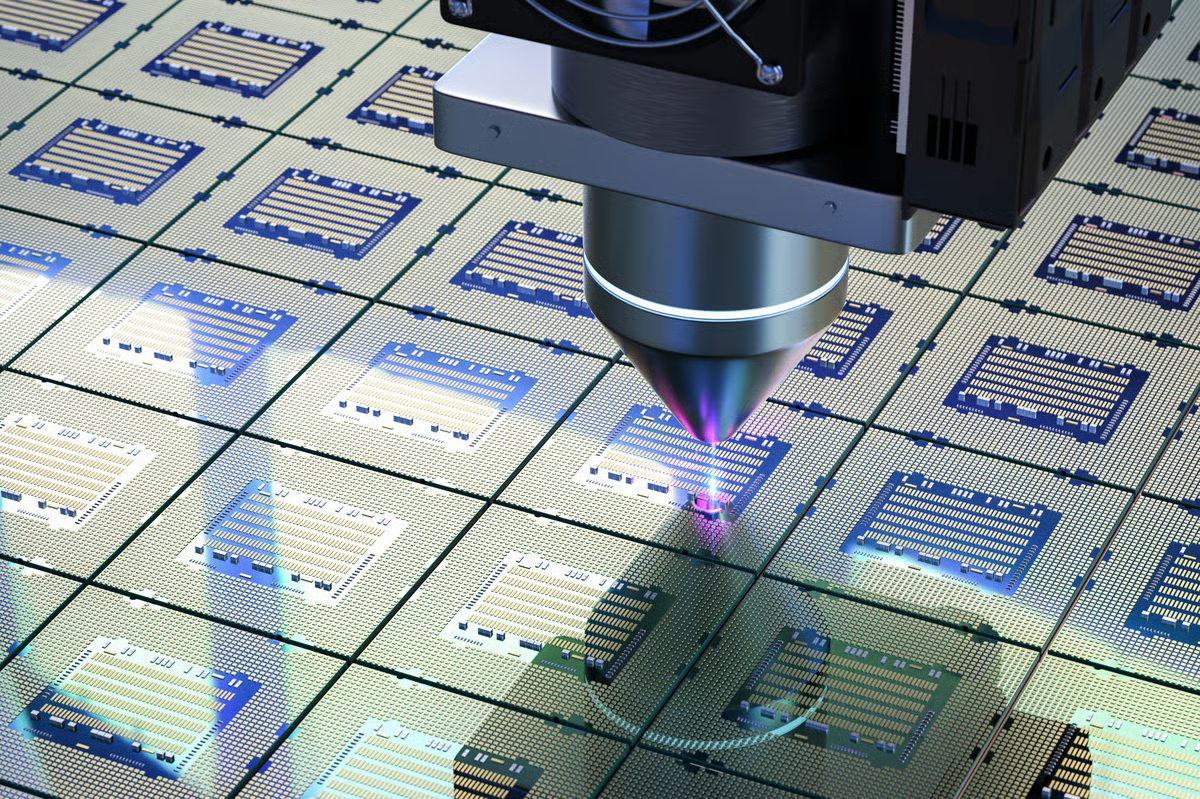
Daniel Wang, CFO of Shanghai Huahong Grace Semiconductor Manufacturing Corporation, says demand from AI, industrials and automotive clients is keeping its fabs running above full capacity, with momentum expected to continue into 2026. He argues the memory boom may last longer because of AI, but warns the semiconductor industry remains fundamentally cyclical.
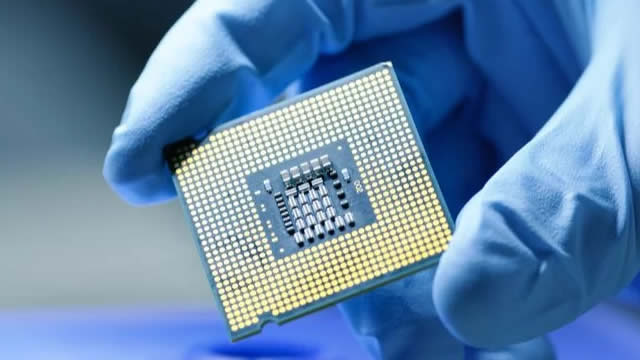
NVIDIA's post-earnings dip spotlights ETFs loaded with NVDA exposure as investors weigh booming AI demand against supply-chain risks.

CFRA Research senior vice president and head of technology Angelo Zino explains why Nvidia, AMD, Microsoft and Meta remain top ‘strong buy' picks amid the ongoing AI-driven tech rally on ‘Making Money.' #fox #media #breakingnews #us #usa #new #news #breaking #foxbusiness #makingmoney #ai #technology #tech #stocks #markets #investing #nvidia #amd #microsoft #meta #wallstreet #artificialintelligence #semiconductors #bigtech

NVIDIA's massive buybacks, dividend hike and booming AI growth put Nvidia-heavy ETFs like SMH, XLK, QQQ and SOXX in focus.
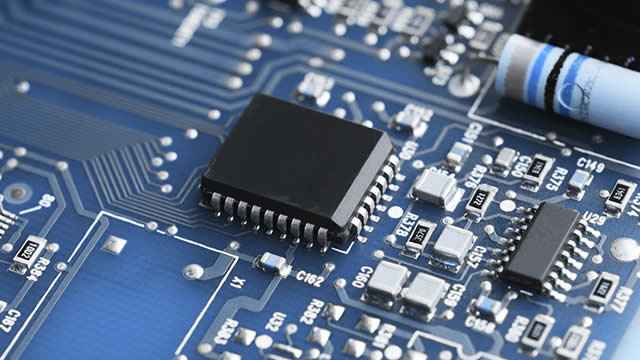
Sometimes it feels like it's Nvidia's world, and we are all just living in it. As we brace for the firm's latest earnings report coming Wednesday, we could say that Nvidia (NVDA) earnings — and more importantly, its forward guidance — have become much more than a par-for-the-course quarterly disclosure.

Europe should aim to create home-grown AI chip design companies, the new head of Belgian research hub imec said on Tuesday, as Brussels prepares a package of measures dubbed Chips Act 2.0.

In a reversal from the SaaS-pocalypse, software is finding strength while AI memory names like Micron (MU) and SanDisk (SNDK) are selling off. Kevin Hincks explains how this all plays into the big picture for tech as Nvidia (NVDA) readies to report earnings Wednesday.
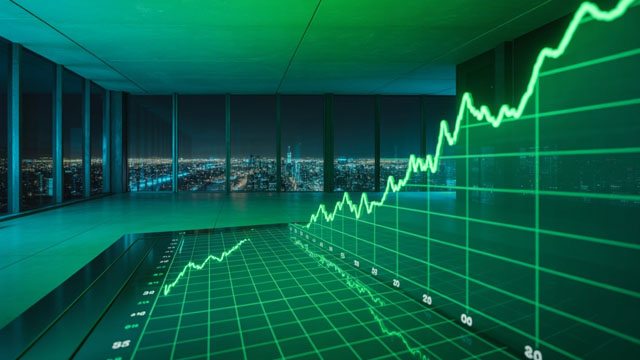
VanEck Semiconductor ETF (SMH) and other semiconductor ETFs surged 200%+ in 13 months, now showing signs of a potential technical top. Trees don't grow to the sky, as they say. The recent 45% rally in SMH over six weeks is historically rare for semiconductors, resembling an 'Empire State Building' top formation (what I call it). Technical indicators like PPO highlight an extremely stretched move, raising caution for investors exposed via SMH, SOXX, QQQ, DIA, and S&P 500.
Billionaire Dan Loeb's flagship hedge fund, Third Point, recalibrated its portfolio in the first quarter of 2026, leaning heavily into the AI trade by initiating a new position in the Vaneck Semiconductor ETF (SMH). Loeb simultaneously increased exposure to individual chip-equipment makers – including ASML, Lam Research, and KLA Corp. Other notable investments he made in Q1 include Broadcom and AI infrastructure name Hut 8.
Nvidia Corporation remains the linchpin of the AI-driven semiconductor sector, underpinning structural shifts in industry valuation and cyclicality. The semiconductor industry is transitioning from cyclical to increasingly non-cyclical, driven by AI, cloud, automation, and automotive demand. Memory stocks like STX and WDC have experienced dramatic re-ratings, reflecting the market's new view on their cyclicality and growth prospects.

U.S. equities opened the new trading week on a split footing on Monday as a sharp unwind in AI-infrastructure names dragged the Nasdaq 100 down by over 1%, while energy, communications and insurance shares cushioned the broader market.

On this episode of the “ETF of the Week” podcast, VettaFi's head of research, Todd Rosenbluth, discussed the Roundhill Memory ETF (DRAM) with Chuck Jaffe of Money Life. The pair discussed several topics related to the ETF, in order to give investors a deeper understanding of it.

Changxin Memory Technologies (CXMT), China's top memory chipmaker, said on Sunday it expects first-half revenue to reach 110 billion yuan to 120 billion yuan ($17.62 billion), according to a renewed prospectus, as surging memory chip prices boost its business outlook.
President Trump says he discussed guardrails on AI and Nvidia's H200 chips with Chinese leader Xi Jinping during a two-day summit in Beijing. Shari Liss, vice president of global workforce development and initiatives at SEMI, joins Bloomberg's Caroline Hyde and Ed Ludlow on "Bloomberg Tech" to discuss what this means for the US semiconductor sector.

There's been much discussion about the possibility of an AI bubble of late.

U.S.-China summit revived hopes for trade, AI chip access and Boeing deals, lifting prospects for China tech, semis and aerospace ETFs.

Chip export controls were not discussed during Trump-Xi talks, U.S. Trade Representative Jamieson Greer said in an interview with Bloomberg TV on Friday. Critical minerals and market access for U.S. tech companies were expected to be key points of discussion at the Trump-Xi summit.

U.S. Trade Representative Jamieson Greer told Bloomberg TV in an interview on Friday that U.S. export controls on semiconductor chips were not a major topic of discussions with Chinese officials in Beijing.
The Roundhill Memory ETF (CBOE:DRAM) launched on April 2, 2026 as the first U.S.

CME Group and Silicon Data are launching a futures exchange for computing capacity. Contracts will be based on daily GPU benchmarks for on-demand rental rates.
Picture a first-time investor who sinks $200 into Intel shares and watches the position climb to $850, a 280% gain. The instinct is to feel like a genius and let it ride. According to Robert Croak and Austin Hankwitz of the Rich Habits Podcast, that instinct is the single biggest mistake beginner investors make. The... The Biggest Mistake Beginner Investors Make, According to the Rich Habits Podcast

Launched on December 20, 2011, the VanEck Semiconductor ETF (SMH) is a passively managed exchange traded fund designed to provide a broad exposure to the Technology - Semiconductors segment of the equity market.
A top South Korean official has proposed a tax on AI profits to be redistributed among society as a semiconductor boom drives massive earnings for tech giants Samsung Electronics and SK hynix.

Soaring profits have investors pouring into shares of CPU, GPU and memory-chip companies.

The SOX continues to follow its projected historical returns and Elliott Wave path, but the advance may be nearing exhaustion, raising the probability of a retracement toward $10,000.

Memory and storage stocks are surging in mid-morning Friday trading as the AI memory supercycle thesis goes fully mainstream.

AI, Alternative Energy and Commodity stocks are all leading this market as a confluence of economic developments drive growth and constrain supply.