Loading market dashboard

Global X - Defense Tech ETF
SHLDFinancial ServicesAMEXUS
Loading disclosure news
News and disclosures filtered by period, publisher, and event group.
Select a headline to open the full news page in the app.
Expense ratios, yield, and portfolio composition reveal distinct approaches in these defense ETFs-how do their strategies stack up for risk and sector focus?
Defense drone stocks are surging at midday Thursday after a Wall Street Journal and CNBC report indicated the Pentagon is in talks with drone manufacturers about funding deals that could include direct federal equity stakes.
New AdvizorPro data shows RIAs broadened their ETF lineups in Q1 2026, leaning into real assets, active managers, and defense strategies.

On ETF Prime, VettaFi's Todd Rosenbluth breaks down 2026's ETF inflows surge and a looming $1 trillion ETF.

The Department of Defense is aggressively reallocating capital away from legacy manned platforms in favor of autonomous artificial intelligence-driven tactical networks and high-altitude hypersonic tracking systems. Multi-hundred-million-dollar contract awards for next-generation uncrewed assets, combined with immediate software and hardware integration between legacy defense contractors and disruptive venture-backed defense technology firms, signal the onset of a structural procurement supercycle.

The Global X Defense Tech ETF (NASDAQ:SHLD | SHLD Price Prediction) has done something unusual for a defense fund in a year when NATO is rewriting its spending playbook.

Exchange-traded funds (ETFs) are rarely identical, and drone ETFs are no exception. Though a relatively new entry into the burgeoning drone ETF space, the REX Drone ETF (DRNZ) is already outflying the Global X Defense Tech ETF (SHLD) in a total return dogfight this year.

Palantir beats Q1 estimates on strong U.S. demand, lifts outlook. AI strength lifts ETFs like PLTW, IGV, SHLD despite valuation concerns.

After a tough few weeks, analyst John Godyn sees an opportunity to buy the dip.

Cinthia Murphy, VettaFi director of research, and Paul Baiocchi, SS&C Technologies head of fund sales & strategy, sit down with CNBC's Kristina Partsinevelos to discuss the increased spending in defense amid the Middle East conflict and how other areas that stand to benefit in the near and medium term.

Defense stocks will be some of the key names to move the stock market higher, says Kevin Mahn. He points to the Trump administration's push for a $1.5 trillion defense budget and lasting geopolitical uncertainty as the sticky points backing his bullish thesis.
Investors are in for a big week with many companies reporting quarterly earnings. Among the biggest sectors that could see stocks volatile with earnings this week is the defense sector.
The history of warfare includes some major milestones that changed how war was fought. A recent announcement by Ukraine may represent just the latest in that long, bloody list.
Global defense spending hit $2.63 trillion in 2025, up from $2.48 trillion in 2024, and the momentum is accelerating.

Peace talks between the U.S. and Iran collapsed in Islamabad on April 11, 2026, and President Trump ordered the U.S.

Since the start of Operation Epic Fury at the end of February, Brent crude oil prices have risen as high as $150 a barrel as the Strait of Hormuz has been effectively closed by Iran. Panic over supply is driving energy prices higher, and consumers are experiencing it at the pump with soaring gasoline prices.

Defense ETFs like ITA gain traction as Middle East tensions persist, boosting demand for missiles, air defense systems and military production.

Major U.S. defense stocks failed to outperform during the Iran conflict, tracking the S&P 500's negative performance instead. In this article, I explore several reasons for their apparent failure to serve as a meaningful hedge during wartime.

The U.S. military's recent Operation Absolute Resolve put F-35s, F-22s, and stealth drones into live combat, and every platform traced back to a company inside Global X Defense Tech ETF (NYSEARCA:SHLD).
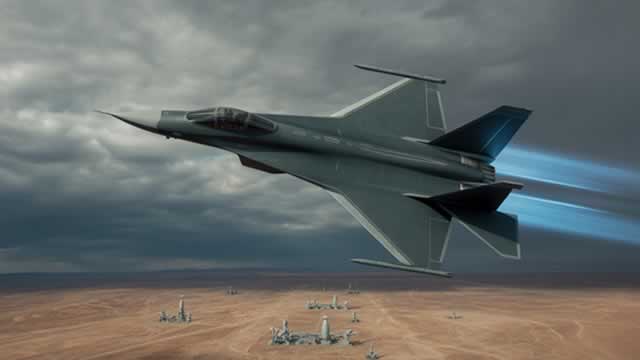
Rising geopolitical tensions and Trump's defense push are fueling a long-term rearmament trend. One can explore ETFs to benefit from this outlook.

The decisive, lethal, and comparatively brief strategic military strikes executed by President Trump and Secretary of War Hegseth have once again elevated the profile of US military supremacy.

Key Takeaways: Defense ETFs now hold $42 billion in assets with $9 billion in inflows this year amid rising geopolitical tensions. Eight out of nine new defense ETF launches since 2025 have been global or international offerings.

The first quarter of 2026 was the moment the market stopped treating technology as a monolith. Beneath the big tech selloff grabbing headlines, a violent dispersion has been bubbling beneath.

Aerospace and defense stocks, including SHLD and ITA, have declined since the Iran conflict despite heightened geopolitical risk. ITA underperformed due to higher commercial exposure and lack of European defense holdings, while SHLD's diversified defense focus limited losses. Macroeconomic concerns, inflation, and fixed-price contract risks are pressuring near-term profitability and valuations across the sector.

VettaFi explores how defense ETFs have expanded beyond traditional contractors into international, space, and drone investment opportunities.

Mounting tensions in the Middle East have pushed Brent crude prices well over $100 a barrel, while Treasury yields remain stubbornly high at 4.25%. In response, ETF flows have fractured into a distinct ‘barbell' formation.

Global X Defense Tech ETF (SHLD) offers exposure to large defense, cybersecurity, and advanced military tech firms, benefiting from ongoing geopolitical tensions. SHLD has outperformed the S&P 500 ETF (VOO) since inception, with a 52.44% total return through 2024 and strong NAV growth. Defense spending growth and rapid AI adoption are expected to drive further SHLD outperformance, particularly if current conflicts persist.

Defense technology ETFs including ITA, XAR and SHLD are in focus as AI platforms increasingly power modern military operations and intelligence.

The tech sector is now massive, and buying the Invesco QQQ Trust (NASDAQ:QQQ) alone does not cut it.

Global conflict has erupted in 2026, from South America to the Middle East. With energy at the center of the picture, markets face potentially serious volatility.