Loading market dashboard
Jungheinrich AG
JUN3.DEIndustrialsXETRADE
Jungheinrich AG
Last saved: Not saved
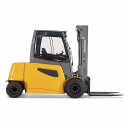
Jungheinrich Aktiengesellschaft, a company established in Hamburg, Germany, in 1953, operates internationally as a comprehensive provider of intralogistics solutions. The firm specializes in manufacturing and supplying a wide array of products and services, including material handling and warehousing equipment, sophisticated automated systems, digital solutions, and associated support services. Its operations are structured into two principal divisions: Intralogistics and Financial Services. The Intralogistics segment is responsible for the development, production, sale, and rental of new material handling and warehouse machinery. It also handles the sale and short-term leasing of used industrial trucks, alongside providing critical spare parts, maintenance, and repair services. Conversely, the Financial Services segment focuses on enabling equipment sales through financing arrangements and facilitating the transfer of usage rights for material handling and warehousing products. Jungheinrich's diverse product portfolio features a broad range of industrial vehicles such as pedestrian trucks, horizontal and vertical order pickers, narrow aisle trucks, reach trucks, stackers, tow tractors, low lift and double decker trucks, and pallet trucks. Further offerings include counterbalanced trucks, specialized small-series and custom-built trucks, automated guided vehicles (AGVs), and stacker cranes. The company also supplies essential components like powertrain solutions, electronic control units, and advanced energy storage systems, including lithium-ion batteries and chargers. In the digital realm, Jungheinrich develops and distributes warehouse and fleet management systems, software for controlling conveyor systems, and various other digital and automation technologies. Its products and services are distributed globally through a combination of its direct sales and service network and an established system of dealers.
Jungheinrich AG trades as JUN3.DE on XETRA. The company is classified in Industrials / Industrial - Machinery and reports in EUR.
The current profile places the business in Industrial - Machinery. This section is intended to summarize the operating segments, products, geographies, and main revenue lines from official filings.
Detailed operating-segment data is not available for this symbol yet.
Use this area for management strategy, capital allocation priorities, target markets, and measurable goals from the latest annual report or investor presentation.
The app now provides the structure, but exact strategic claims should come from official company documents before being treated as a finished investment thesis.
Jungheinrich AG can be compared against peers such as Bilfinger SE, DMG Mori AG, Krones AG, KSB SE & Co. KGaA, KSB SE & Co. KGaA, Plug Power Inc..
A complete thesis should compare growth, margins, balance-sheet risk, valuation multiples, and market position against direct competitors.
Current signals to investigate include market capitalization of €2.35B, beta of 1.74, and return on equity of N/A.
This section should be validated with evidence such as durable margins, brand strength, regulation, switching costs, cost advantage, distribution, or technology.
Key risks should include financial leverage, cyclicality, customer concentration, regulatory exposure, currency risk, and execution risk.
JUN3.DE currently shows total debt of N/A and beta of 1.74. Missing data should be treated as a research gap, not as low risk.
Production-capacity detail is not available as structured data yet. For industrial, defense, semiconductor, or real-estate companies, this should be reviewed from annual reports and investor presentations.
No structured backlog field is available yet. If the company reports backlog, review the relevant filing section before adding it to the thesis.
Use this section for major contracts, product launches, construction projects, acquisitions, or strategic programs that can materially affect valuation.
No recent SEC-style filings are available for this symbol yet.
Customer concentration is not available as structured data here. Add it from official filings when a company discloses material customers or revenue concentration.
Supplier concentration and critical supply-chain dependencies are not available as structured data here. This should be researched from annual reports and risk disclosures.
Company website: https://www.jungheinrich.com
For US-listed stocks, verify the thesis against official filings, earnings call transcripts, and company investor relations materials.