Loading market dashboard

U.S. Global Jets ETF
JETSFinancial ServicesAMEXUS
Loading disclosure news
News and disclosures filtered by period, publisher, and event group.
Select a headline to open the full news page in the app.
The global airline industry nearly halved its 2026 profit forecast on Sunday, citing conflict in the Middle East that has driven up fuel costs, disrupted key air corridors and exposed the fragility of a sector operating on thin margins.

Budget carriers have been among the hardest hit, lacking higher margin revenue streams.

Global airline chiefs open their annual summit in Rio de Janeiro on Saturday facing a sharper test of the industry's post-pandemic recovery, as the Iran war drives up fuel costs and disrupts airspace while carriers try to cushion the blow with higher fares and tighter capacity.
Global airline bosses gathering in Rio de Janeiro this weekend will be searching for answers to the industry's biggest crisis since the pandemic, with the Iran war driving up jet fuel costs, forcing flight detours and testing carriers' ability to raise fares.

Explore how sector focus, expense ratios, and portfolio composition set these two aerospace ETFs apart for investors seeking growth beyond the runway.

Oil prices are high. Airfares are high.
Expense ratios, volatility, and sector focus reveal key differences between these two aviation ETFs. See how their risk profiles and returns stack up.

After a tough start to the year, some analysts see airline stocks catching a tailwind soon.

The airline is trying to shore up operations as it heads into the busy summer travel season, when problems can snowball into meltdowns.
Alaska Airlines launched its new Seattle-to-London route on Thursday, at a testing time for aviation. An executive told Business Insider most airlines are only covering up to 50% of increased fuel costs.

Airline stocks rose Wednesday as lower oil prices and stronger booking commentary helped lift sentiment, with investors also looking ahead to summer travel dema
Europe's airlines are losing ground to global rivals and need stronger EU support to tackle rising regulatory costs, make sustainable jet fuel affordable and better manage crises, a lobby group representing the continent's main carriers said.

Oil prices slid after Trump delayed a planned Iran strike, boosting prospects for retail, airline, India and gold mining ETFs.

The price of jet fuel has nearly doubled since the start of the Iran War as the closure of the Strait of Hormuz restricts supplies from key exporters. With the crucial summer season ahead, and the Strait remaining closed, there are fears of shortages of jet fuel, with airlines already altering schedules to combat the potential problem.

Jet fuel prices surge from $95 to $163 a barrel, pressuring airline ETFs as carriers cut capacity, raise fares and trim forecasts.

In less than a month, the 2026 FIFA World Cup kicks off across the United States, Canada, and Mexico, running June 11 through July 19, 2026.

Delta Air Lines will give its employees a 4% pay increase this year, similar to the increase in 2025, even as the airline industry grapples with uncertainty over surging fuel costs. "Human capital is the most important capital that we have and particularly in times of trouble," says CEO Ed Bastian.

After Spirit Airlines vanished from the skies, its not-quite-sudden collapse raised questions about why the successful low-cost model, born in the U.S. airline industry, is failing.

Indian travel stocks came under pressure after Prime Minister Narendra Modi urged citizens to avoid unnecessary foreign travel, cut fuel consumption and defer gold jewellery purchases for a year, as the government sought to ease pressure on the rupee and contain rising import costs. The remarks, delivered on Sunday, were framed as a national appeal rather than an immediate policy change.

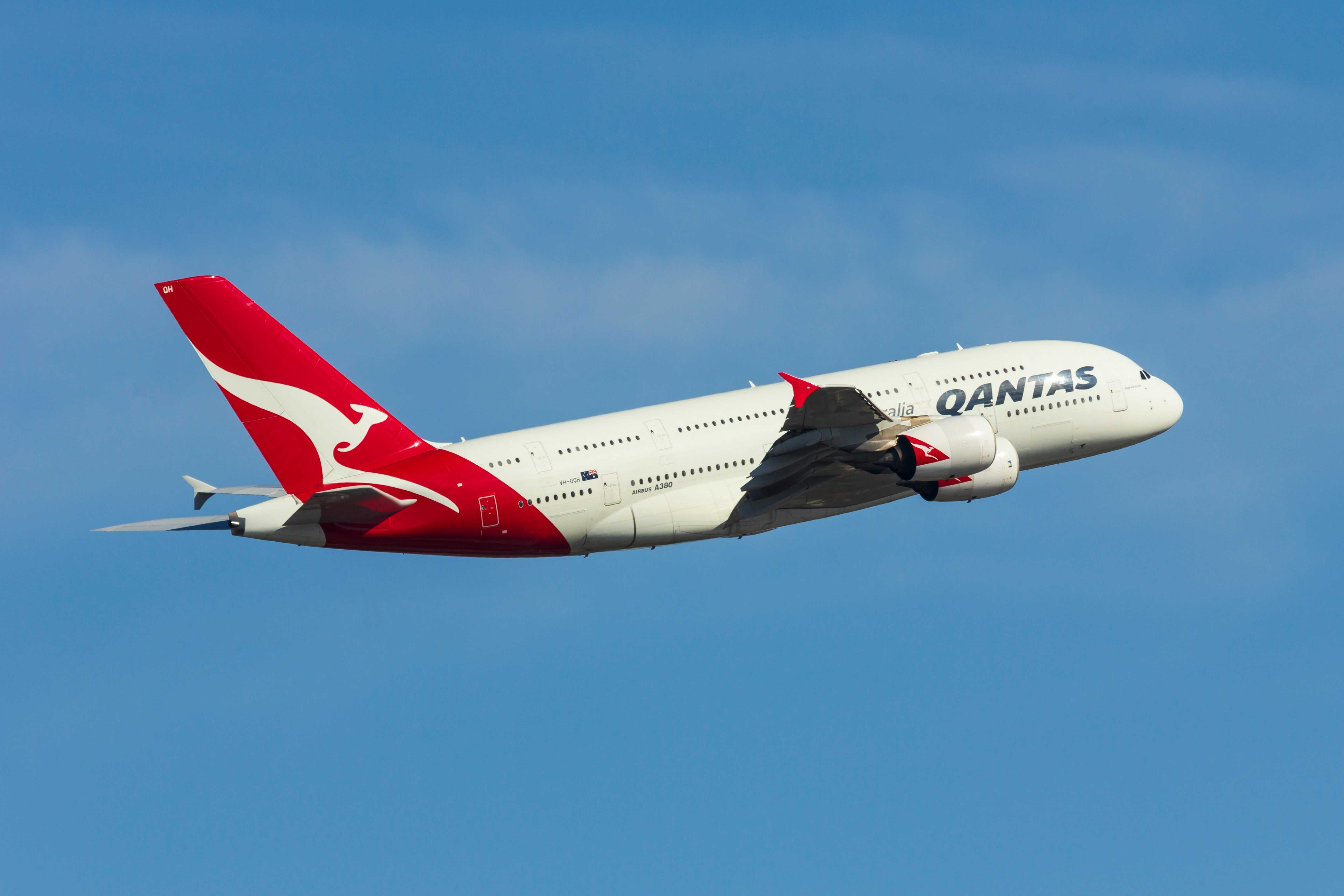
The price to fill commercial jetliners has nearly doubled as the Strait of Hormuz remains closed. It costs about $340,000 to fully fuel an Airbus A380, an increase of about 61% from pre-war levels.

The recent grounding of U.S. budget carrier Spirit Airlines could help ease shortages of next-generation RTX spare engines needed to keep late-model Airbus single-aisle jets flying, industry executives and analysts say.

The effective closure of the Strait of Hormuz has prevented 20% of the world's exported jet fuel from making it to airlines around the globe, while also stopping one fifth of the world's crude oil from reaching refineries. That's causing ripple effects throughout the global aviation network as airlines face a summer of higher fuel costs and potential fuel shortages.

Airlines for America President and CEO Chris Sununu discusses the European jet fuel shortage, TSA staffing issues, recent air traffic close calls and more on 'Varney & Co.' 0:00 European Jet Fuel Shortage Concerns 0:53 Why Domestic Airfares Are Rising 1:51 TSA Staffing Crisis & Government Shutdown 4:10 Air Traffic Control Close Calls & Modernization 5:12 Grading Transportation Secretary Sean Duffy

Transport ETFs are lagging as fuel costs rise and Amazon disrupts logistics, while tech and airline-linked ETFs show relative strength.

U.S. airlines spent more than $5 billion on jet fuel in March than they did in February, U.S. government data released Wednesday show. The spike came after the U.S.-Israel strikes on Iran began, effectively closing the Strait of Hormuz.

More than 75,000 summer flights have been removed from airline schedules, per Cirium. The bulk of those came from Spirit and United Airlines.
Major U.S. airlines spent just over $5 billion on jet fuel in March, up 56% and $1.8 billion over February costs, the U.S. Transportation Department said.

Global airlines have cut around 13,000 flights scheduled for May, as surging jet fuel prices driven by the Middle East conflict force carriers to trim capacity and reassess operations. The cancellations account for roughly 1% of global flights, a notable disruption across the aviation sector.

Visa delays, concerns about how they would be treated by immigration officials, soaring airfares, a strong US dollar, and geopolitical tensions have kept international travelers home, hotel industry body the AHLA said.

Jet fuel prices have jumped far more than crude oil since fighting in Iran began, pressuring airlines like Delta Air Lines and forcing capacity cuts.

Jonathan Kanter, Fmr. Asst. Attorney General, says Spirit's collapse stems from management decisions, warns on weak airline competition, and sees the OpenAI case as complex but unlikely to force major structural change.
As the U.S. war in Iran enters its third month, the market has seemingly stabilized after initial concerns about energy industry shocks and the price of oil. However, ongoing political developments—including the continuing ceasefire beginning in early April—mean that uncertainty is still very much a predominant factor.

The airline's abrupt shutdown upsets travelers across the country, and its staff.
United, Delta, JetBlue and Southwest are capping ticket prices for Spirit customers who now need to rebook canceled flights. Rivals are also offering free seats to help Spirit employees get home.

WSJ's Dean Seal breaks down why Spirit Airlines is preparing to cease operations—possibly as early as Saturday morning—and what it means for passengers like him, who have an upcoming flight with the low-cost carrier. #wsj #thewallstreetjournal #spiritairlines #bankruptcy

Japan's two biggest airlines, ANA Holdings and Japan Airlines (JAL), said on Thursday the Middle East conflict is keeping fuel costs elevated and the outlook uncertain.

Europe faces an acute logistics problem as the Iran war severely restricts flows from the Middle East. The International Energy Agency earlier this month warned that Europe could run out of jet fuel in weeks.

Sara Nelson, Association of Flight Attendants international president, and Joel Griffith, Advancing American Freedom senior fellow, join 'Squawk Box' to discuss the pros and cons of a potential $500M federal rescue of Spirit Airlines, impact on the airline industry at large, and more.

European airlines are facing their biggest challenge since the COVID-19 pandemic as the Iran war pushes up jet fuel prices and buffets travel through the Middle East, casting a shadow over the summer holiday season.
Jeffries MD and senior equity research analyst Sheila Kahyaoglu discusses defense stocks amid the Iranian conflict on 'Making Money.' #fox #media #breakingnews #us #usa #new #news #breaking #foxbusiness #makingmoney #stocks #defense #military #war #iran #conflict #economy #markets #investing #finance #airlines #travel #fuel #energy #global #politics #political #politicalnews #government
Spirit Airlines is on the brink of collapse and is warning of possible liquidation. If Spirit disappears, travelers are likely to feel the impact quickly.
Airlines are facing big increases in jet fuel costs due to the Iran war. CEOs are reducing capacity and increasing ticket prices and bag fees.

United Airlines cut its full-year outlook amid fuel uncertainty despite a strong Q1. While much of the downside appears priced in, risks linger due to geopolitical tensions.

U.S. airlines are raising fares and baggage fees to offset higher fuel costs from the Iran war. Some are also cutting capacity heading into the busy summer travel season.

Airline stocks and exchange-traded fund (ETF) are highly sensitive to the Iran war, mainly due to cost shocks and, to some extent, demand woes. Jet fuel is a major expense (about 20-30% of costs), and oil price spikes during conflicts in the Middle East squeeze margins.

The U.S. Global Jets ETF (JETS) was launched on April 30, 2015, and is a passively managed exchange traded fund designed to offer broad exposure to the Industrials - Transportation/Shipping segment of the equity market.

Iran war reshaped Q1 markets: energy, shipping & lithium ETFs surged while tech and airlines lagged as inflation fears and oil shocks rattled sentiment.

Airlines face turbulence as oil spikes on Iran crisis. Capacity cuts may support margins, but ETFs like JETS lag while inverse plays surge.

JetBlue raises Q1 unit revenue guidance to 5-7% as premium demand surges. Get the latest on JBLU's turnaround and analyst price targets.
Oil price volatility is pressuring airlines and transport, while fueling gains in energy stocks like Chevron (CVX) and Exxon Mobil (XOM). Banking stocks face headwinds from private credit concerns, with JP Morgan (JPM), Wells Fargo (WFC), and Goldman Sachs (GS) showing notable monthly declines.

A new energy shock has struck global markets as the U.S.-Israeli war against Iran enters its second week. Oil prices briefly shot over $115 per barrel in the overnight session on Sunday, March 8, before settling back under $90 by Monday evening.

Delays at U.S. airports may last at least another week as Congress remains at an impasse over funding for the Transportation Security Administration and other government agencies.