Loading market dashboard

iShares U.S. Oil & Gas Exploration & Production ETF
IEOFinancial ServicesCBOEUS
Loading disclosure news
News and disclosures filtered by period, publisher, and event group.
Select a headline to open the full news page in the app.
Crude oil prices fell as Middle East tensions eased, but tight inventories, record exports, and OPEC's demand outlook keep supply risks elevated.

Listen to a few earnings calls this season, and you'll get the sense that CEOs are worried about high oil prices as the Iran war continues. But a look at the numbers shows those anxieties haven't had much of an impact yet on their profit expectations for this year.

Seven OPEC+ countries will raise oil output targets by 188,000 barrels per day in July, OPEC said in a statement after a meeting on Sunday.

OPEC+ is set to agree on Sunday a fourth increase in oil output targets in as many months, three OPEC+ sources said, even though the U.S. war with Iran is still preventing several of the group's members from pumping more.
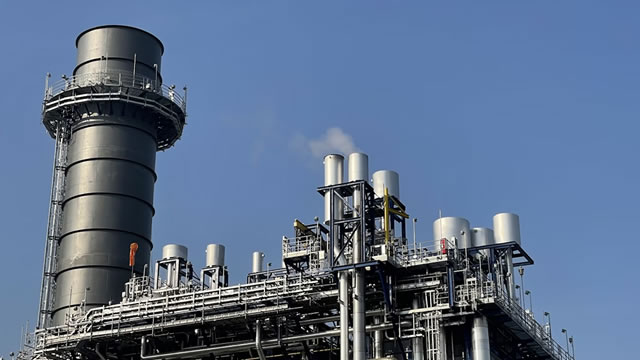
There are growing worries that U.S. commercial oil inventories are too low for comfort as the war with Iran enters its fourth month far from a clear resolution — and a lot hinges on how much longer the conflict drags on.

Goldman Sachs said in a note on Friday that global oil demand has declined more than expected, posing two-sided risks to its fourth-quarter 2026 Brent crude price forecast of $90 a barrel and WTI forecast of $83 per barrel.

Record Resources Inc (TSX-V:REC) earlier this week outlined the potential of its offshore Ngulu Block in Gabon, with management highlighting both a significant existing discovery and substantial exploration upside across the licence area. Speaking with Proactive, chief operating officer Alain Mizelle said the company signed the production sharing contract for the Ngulu Block late last year alongside its strategic partner.

Iran's Revolutionary Guard threatened this week to close the Bab el-Mandeb Strait, the trade chokepoint at the southern end of the Red Sea. The Bab el-Mandeb has acted as crucial relief valve for the oil market as exports have plunged through the Strait of Hormuz during the U.S.-Iran war.

Oil prices were in retreat on Friday after having risen for three straight sessions earlier in the week, as diplomatic overtures to bridge differences between the U.S. and Iran continue.
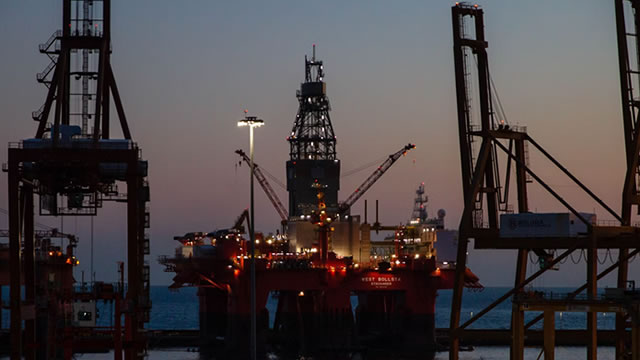
Oil markets are losing ground as traders prepare for the start of the rate hike cycle.

Global oil inventories are running dangerously low as a deal to re-open tanker traffic through the Strait of Hormuz has proven elusive, and industry executives and analysts warn there could be another oil price shock in the coming weeks, severe enough to upset broader financial markets.
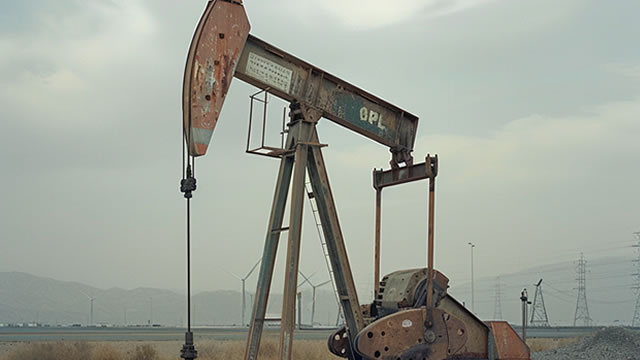
Crude oil prices weaken as Iran talks reduce supply risks, the dollar surges, and WTI falls below its 50-day moving average, signaling downside pressure.
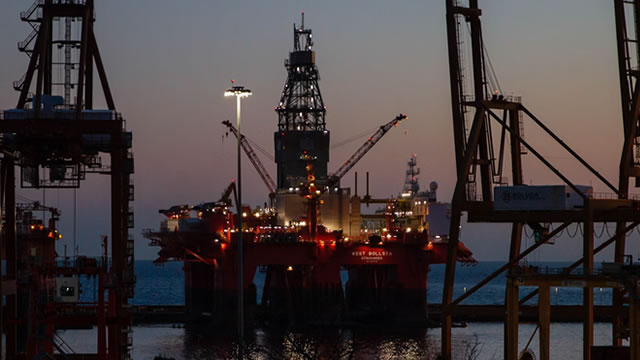
Companies that borrowed oil from the U.S. Strategic Petroleum Reserve in recent months will add an extra 40 million barrels of crude in the form of premiums after the conflict in Iran is over, U.S. Energy Secretary Chris Wright said on Friday in an interview on Fox Business.

Crude oil drops a bit in early trading on Friday, perhaps due to a lack of major headlines. That being said, this is a market that is still waiting for clarity from the Middle East.
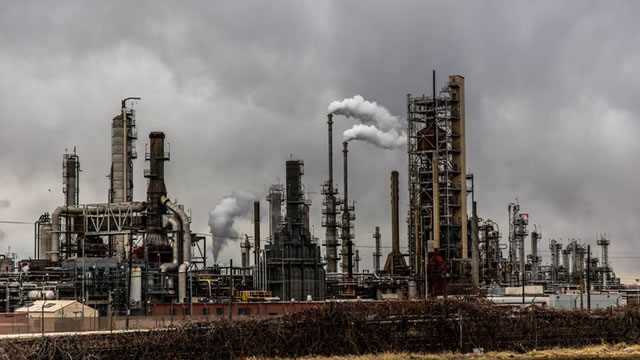
OPEC+ ministers gather on June 7 for their first bi-annual policy meeting since the United Arab Emirates left the alliance last month, against a backdrop of extraordinary disruption. While the group is expected to maintain current output plans, investors are paying attention to the UAE's bet for more independence in global oil markets.

American Petroleum Institute CEO Mike Sommers joins 'Mornings with Maria' to warn that shrinking U.S. oil inventories and global supply disruptions could lead to higher gas prices for American consumers.
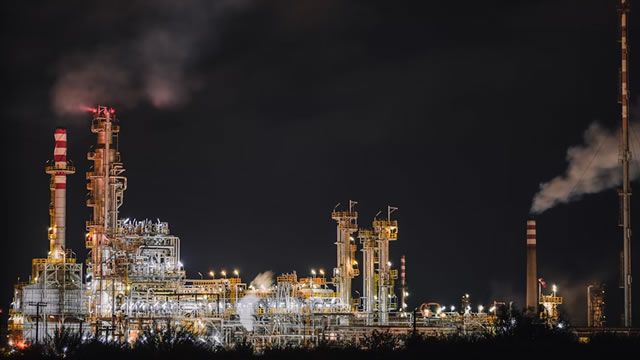
At the prairie town that calls itself the pipeline crossroads of the world, some 400 oil storage tanks sprawled across Cushing, Oklahoma, are nearly empty, drained by refiners worldwide to plug a massive shortfall in global supplies caused by war in the Middle East.
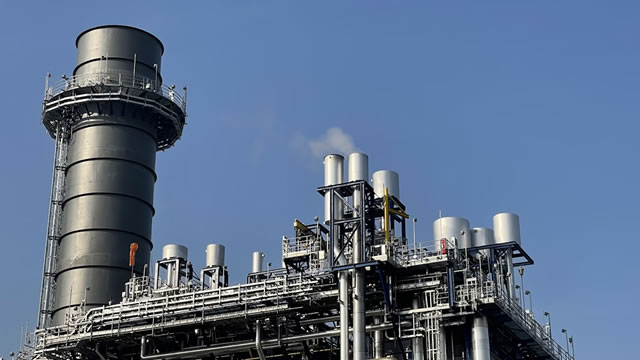
One month-plus into the truce, supply-demand dynamics dominate as US production stays robust. WTI slides below $92 after channel violation, Brent defends $94.69 support, and Natural Gas maintains position at $3.327 with positive momentum.

Brent crude and WTI prices were shrugging off fighting in Lebanon as the market concentrates on the U.S.-Iran peace talks.
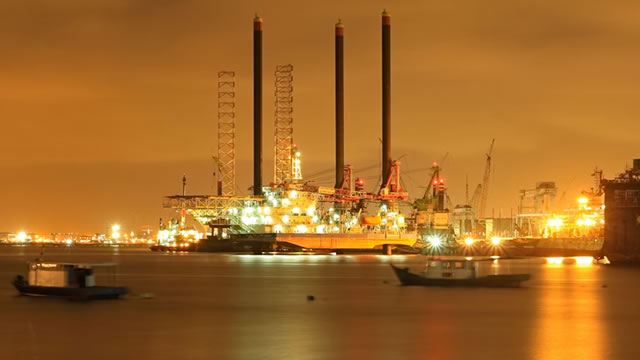
Quantitative hedge funds have posted double-digit gains in 2026 boosted by strong trends across commodities, currencies and other asset classes. Energy has been a key driver of returns, with many strategies profiting from long bets in crude oil, gasoline and diesel due to ongoing supply concerns.
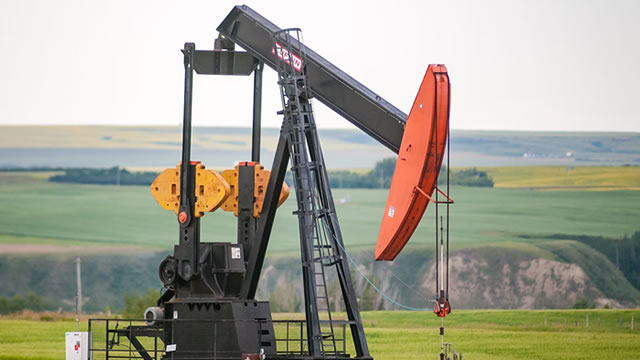
Oil prices were little changed on Friday following sharp declines in the previous session, with prospects dimming for a near-term end to the U.S.-Israeli war with Iran after the Hezbollah militia rejected a new ceasefire in Lebanon.
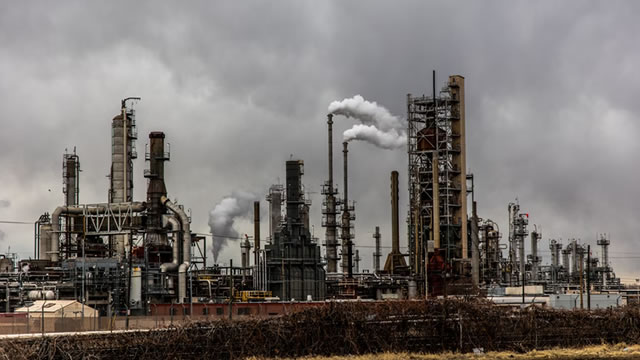
Oil edged lower in early trade amid mixed Middle East developments.

'The Big Money Show' analyzes the market amid President Donald Trump's optimism over an Iran deal, China's reliance on Iran, oil prices and more. 00:00 - Trump: Negotiations with Iran are going very well 00:50 - Why investors are ignoring the Iran resolution delay 02:25 - How the U.S. benefits from the Strait of Hormuz closure 04:30 - China's energy shift and demand destruction 06:40 - Major oil companies warn of critical inventory lows 09:10 - Analyzing the Supreme Leader's "delusional" memo 11:00 - Making Iran irrelevant in the global energy market
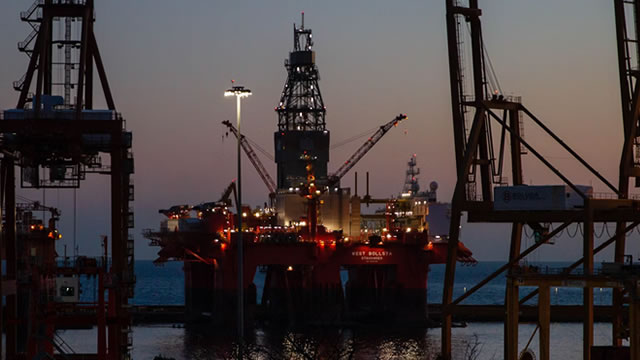
Crude oil is consolidating within a symmetrical triangle formation as moving average resistance and rising support compress price action ahead of a potential breakout or breakdown.

Hezbollah, which is fighting against Israel, rejected the ceasefire deal.
Most U.S. stocks are rising Thursday as oil prices ease, but slumps for influential artificial-intelligence winners are keeping Wall Street in check.

The International Monetary Fund said on Thursday that oil prices are currently only about 3% higher than levels used in its baseline global growth forecast in April, but physical spot prices remain volatile and global reserves continue to fall.
Iranian exports of crude oil and condensate fell to their lowest level in at least six years in May, falling well below 300,000 barrels per day, mainly due to the U.S. naval blockade, according to shipping data and analysts.

Buccaneer Energy Plc (AIM:BUCE, FRA:LMU1) could be approaching a re-rating as production growth and stronger cash generation begin to close the gap between the company's market value and the underlying worth of its assets. This was suggested in a new note from house broker SP Angel, which reiterated a 'buy' recommendation and 0.05p target price, arguing that the shares offer more than 350% upside to its risked net asset value.

EPA Administrator Lee Zeldin discusses rising oil prices amid U.S.-Iran tensions, the Trump administration's energy strategy, Everglades restoration funding and new efforts to phase out animal testing on ‘Mornings with Maria.' #foxbusiness #morningswithmaria

The crude oil market continues to see a lot of noise, as we are continuing to pay close attention to the headlines coming from Iran and the United States.
Russian Deputy Prime Minister Alexander Novak said on Thursday there was rising uncertainty about global oil demand and that he had discussed this issue with Saudi Energy Minister Prince Abdulaziz bin Salman.

OPEC expects robust oil demand growth and is not changing its estimates, Secretary General Haitham Al Ghais said on Thursday at the St Petersburg International Economic Forum.
President Donald Trump told aides that he won't resume the war unless U.S. troops are killed, according to The Wall Street Journal.

Oil prices rose Wednesday following the latest flare-up in fighting to threaten the U.S.-Iran ceasefire, and U.S. stocks retreated from their records.

Plus, bitcoin is in an epic slump.

Quantum Helium Ltd (AIM:QHE) has reported that oil production from its Sagebrush Project, in Colorado, generated gross revenue of US$108,288 in the first quarter, giving the helium-focused group continued near-term cash flow as it advances testing and development work across its US portfolio. Gross oil production for the three months to 31 March 2026 totalled 2,482 barrels, compared with 2,645 barrels in calendar Q4 2025.

Crude prices slipped on Thursday after Israel and Lebanon agreed to implement a ceasefire, with markets pricing in the possibility that the deal could unlock a broader settlement to end the wider US-Israeli war with Iran and, crucially, reopen the Strait of Hormuz. Brent futures eased towards $96.92 a barrel, while US West Texas Intermediate fell to around $95.24, paring gains accumulated over the previous two sessions when both benchmarks had risen around 2% after a fresh surge in Middle East hostilities, including Iranian drone attacks on Kuwait and US military strikes near the Strait of Hormuz itself.
[url="]Reply[/url] [EXM, STAR: REY] and the [url="]European Institute of Oncology[/url] (IEO) have launched a collaboration focused on the co-development and t

Iranian oil prices slipped into discounts for the first time since April, while Russian crude premiums eased as traders cut prices to entice Chinese buyers amid sluggish demand, trade sources said.

With geopolitical risk premium largely removed, oil benchmarks found support inside channels while natural gas maintained strength. WTI defended $95.53 with higher lows, Brent tested $97.18, and NatGas retested $3.231 after recent surge.
Asian equities fell on Thursday as renewed fighting between the United States and Iran pushed investors back towards safer assets, even as oil prices eased after Israel and Lebanon moved to implement a ceasefire. MSCI's Asia-Pacific ex-Japan index dropped 1.5%, while S&P 500 e-mini futures slipped 0.5%.

Oil prices remain supported as Iran tensions, Strait of Hormuz risks, and falling U.S. crude inventories keep WTI near a key breakout zone while Brent holds its bullish structure.

Oil prices eased on Thursday as Israel and Lebanon's ceasefire agreement boosted hopes for a broader deal to end the U.S.-Israeli war with Iran, while the U.S. House approved a resolution seeking to curb President Donald Trump's war powers.
Oil futures fell in early Asian trade on a possible technical correction after crude futures rose for the third straight session overnight.
There's still plenty of room for AI memory stocks to run, both in the U.S. and abroad, says Noah Kann. He touches on the low valuations in companies like Micron (MU) in the U.S. and Samsung overseas, making them attractive to private firms with dry powder.
In turn, the U.S. attacked an empty oil tanker that was headed to Iran.

U.S. crude oil inventories extended their decline, falling by 8 million barrels, as exports rose and refineries ran near full capacity.
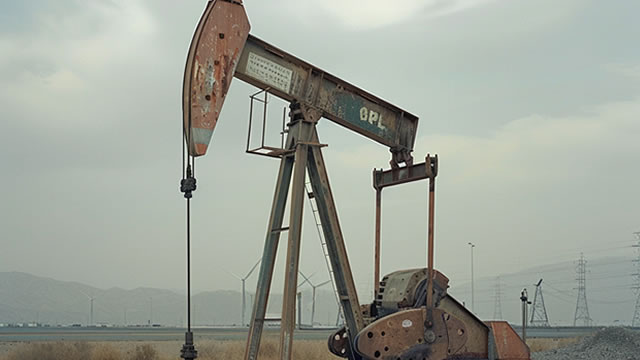
Crude oil rallies early on Wednesday, as we continue to see a lot of headlines coming out of the Middle East that suggest we are nowhere near a resolution of tensions between the United States and Iran.

US stocks are set for an uneven start on Wednesday, as oil prices rebounded to their highest levels this week, ahead of a glut of macroeconomic data. Dow Jones futures were down 125 points, or 0.2%, while the S&P 500 was flat and Nasdaq futures rose 0.1%.

Three reasons why oil is staying below $100 a barrel. I can more easily make the case for $50 oil than $150 oil.

WTI crude futures have risen nearly 10% in three days as hopes for a quick peace deal fade.
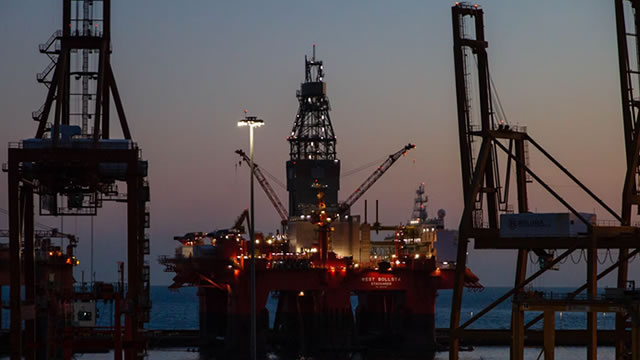
Kuwait could recover its oil production to almost 70% of normal levels in 6-8 weeks after the Strait of Hormuz reopens, Kuwait Petroleum Company's managing director for international marketing, Shaikh Khaled Ahmad Al-Sabah, said on Wednesday.
Russia's oil and gas tax revenue, which accounts for around a fifth of total budget income, increased by 32.4% year-on-year in May to 678.9 billion roubles ($9.3 billion), Finance Ministry data showed on Wednesday, thanks to a global oil price rally fuelled by the Middle East war.
The current oil supply crisis shows there is underinvestment in oil refining as demand holds resilient, Saudi state-owned Aramco's vice president of market analysis and sustainability, Musaab Al Mulla, said on Tuesday.

U.S. futures were mostly steady as stocks looked to extend the technology-led surge, even as continued Middle East escalation clouded sentiment in other sectors.

Brent crude and WTI prices were rising on Wednesday after an exchange of fire between American and Iranian forces.

European stocks slip on U.S. tariff proposal

Rick Gardner of of RGA Investments says higher defense spending commitments across Europe could support the region's defense stocks, which remain relatively cheaper than U.S. peers. He also sees upside for U.S. LNG exporters, producers and refiners if Europe increasingly looks beyond the Gulf region for energy supplies.

With geopolitical risk premium largely removed, oil benchmarks found support inside channels while natural gas maintained strength. WTI defended $94.68 with higher lows, Brent held $96.93, and NatGas retested $3.161 after surge.