Loading market dashboard

iShares Self-Driving EV and Tech ETF
IDRVFinancial ServicesAMEXUS
Loading disclosure news
News and disclosures filtered by period, publisher, and event group.
Select a headline to open the full news page in the app.
China has deliberately and aggressively expanded its EV footprint throughout Europe, the U.K., Asia and Australia, exporting millions of vehicles, building factories and widening supply chains. Despite tariffs, stringent regulations and fierce opposition from lawmakers and the American auto industry, there's a growing possibility that Chinese electric vehicles will be sold in the U.S. in the next few years.

Sales of hybrid vehicles rose 33% in May versus last year, as buyers seek better fuel economy.

Major automakers backed the Environmental Protection Agency proposal to delay enforcement of a regulation requiring significant cuts in air pollution from vehicles for two years but want the agency to move quickly to rewrite the rules.
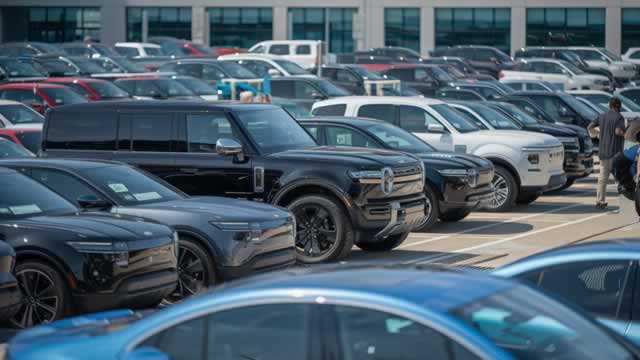
Autonomous driving gains traction as Tesla, Waymo and Zoox expand robotaxis, while ETFs offer diversified exposure to the AV boom.

Spiking fuel prices across the U.S. have put the spotlight back on EVs.

Demand for electric vehicles in Europe has surged as high fuel prices linked to the Iran war propel sales of new and second-hand EVs, data exclusively shared with Reuters shows, providing a much-needed boost to the auto industry.

Canada is allowing 49,000 Chinese-made electric vehicles to be imported for retail sales annually at a tariff rate of 6.1%. That's opening the market for auto dealers in the country to sell Chinese EVs.

Electric vehicle sales have soared in Europe and much of the rest of the world, but Americans are still hesitant.
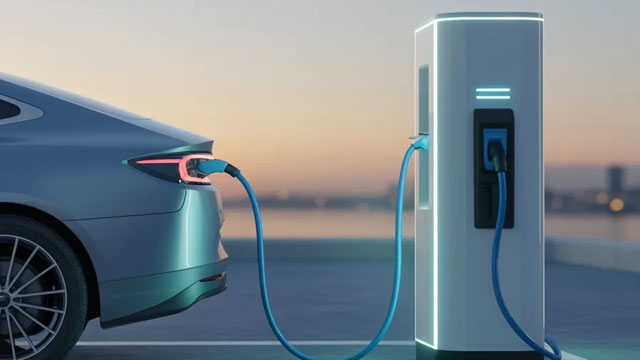
Global demand for electric vehicles rose for a second straight month in April as high petrol prices kept steering buyers away from combustion-engine cars, data from consultancy Benchmark Mineral Intelligence showed on Wednesday.
Two members of the U.S. House of Representatives on Monday will introduce legislation to toughen a U.S. government ban on Chinese automakers from entering the American market just before President Donald Trump heads to China for talks.

As President Donald Trump prepares to meet with Chinese President Xi Jinping this week, the U.S. auto industry and lawmakers on both sides of the aisle are hammering him with a simple message: Please don't offer China any access to the U.S. car market.

China exported more electric vehicles and plug-in vehicles than gasoline or diesel cars for the first time in April, as automakers expanded aggressively overseas to offset subdued demand in the domestic market.

Legacy Western automakers once held the keys to China's car market, but the 2026 Beijing Auto Show shows how domestic EV makers are taking the lead. Stephen Engle reports on how the latest tech and aggressive pricing are winning over consumers.

We got hands-on with BYD's new Flash Charging tech in Beijing, and it's a big leap forward. Think up to 300 miles of range in the time it takes to grab a coffee.
Electric vehicle sales in China and Europe have reached a threshold or "tipping point" that has triggered an irreversible shift away from their petrol and diesel-powered equivalents. For their article published in Nature Communications, researchers analyzed global sales from 2016–23 and observed that EV sales were increasing exponentially across 32 countries, with the global fleet of electric and hybrid vehicles doubling every 1.5 years.

iShares Self-Driving EV and Tech ETF (NASDAQ:IDRV) has rebounded sharply, gaining 14.41% in the past month and 48.01% over the trailing year.

The Electric Vehicle (EV) sector has ballooned to become an industrial sector in its own right.

Energy market volatility and rising fuel costs may be fast-tracking EV adoption. EV ETFs may be a long-term play worth watching.