Loading market dashboard

iShares Gold Strategy ETF
IAUFFinancial ServicesCBOEUS
Loading disclosure news
News and disclosures filtered by period, publisher, and event group.
Select a headline to open the full news page in the app.
Inflation fears on multiple fronts have taken their toll on the gold market, with prices breaking below a critical long-term support level.

The global gold supply will see modest growth in both mine production and recycling in 2026, even as gold demand is projected to decline as double-digit losses in jewelry and central bank purchases are offset by increased investor appetite for bars and coins, which will replace jewelry as the largest component of demand for the first time, while the annual average gold price is forecast to surge by 43% to a new record high of $4,920, according to the latest analysis and projections from Metals Focus.

Spot gold and silver prices are lower in early U.S. trading Friday, after stronger-than-expected U.S. payrolls lifted Treasury yields, firmed the dollar and pressured the rate-cut trade.

The gold market is seeing surging selling pressure as the U.S. economy created far more jobs than expected, raising expectations that the Federal Reserve has room to raise interest rates to cool inflation.
Spot gold prices are firmer and spot silver prices are sharply higher in early U.S. trading Thursday, as a softer U.S. dollar, weaker crude oil and mixed U.S. equity futures framed the final session before the May employment report.
Spot gold and silver prices are sharply lower after the close Wednesday, as crude oil rallied, Treasury yields rose and renewed U.S.-Iran fighting pressured non-yielding metals.

One day after a bombshell report from Bloomberg claimed the Reserve Bank of India (RBI) sold gold reserves worth roughly $12 billion in the two weeks through May 22, the central bank issued a firm denial.The RBI said in a statement on Wednesday that its physical stocks of the precious metal remain unchanged at 880.52 tonnes.
The U.S. service sector improved above expectations last month, according to the latest data from the Institute for Supply Management (ISM).The ISM announced on Wednesday morning that its Services Purchasing Managers Index came in at 54.5 in May, up from 53.6 in April. The data was better than expected, as economists were looking for a reading of 53.8.

The gold market could see renewed selling pressure as the U.S. labor market remains resilient, with the private sector creating slightly more jobs than expected in May.
Spot gold prices are near steady and spot silver prices are lower after the close Tuesday, as a stronger U.S. dollar and firmer crude oil offset support from lower Treasury yields.
Gold prices declined in May, as the Iran conflict supported yields and the dollar while reducing expectations for rate cuts, but debt concerns, de-dollarization, sticky inflation and steady central bank demand remain key pillars of support for gold, the latter despite some temporary selling linked to energy-related pressures., according to Ole Hansen, head of commodity strategy at Saxo Bank.

The gold market is struggling to hold key near-term support at $4,500 an ounce as the U.S. labor market remains fairly resilient, with the number of available jobs rising more than expected in April.

Spot gold and silver prices are lower after the close Monday, as crude oil jumped, Treasury yields firmed and U.S.-Iran negotiations remained unresolved.

Gold and silver prices are trapped in the range established earlier in the U.S.-Iran conflict, while high prices and new import duties are impacting key areas of the Asian market, according to precious metals analysts at Heraeus.In their latest update, the analysts noted that gold prices continue to be dominated by shifting Iran-U.S. negotiations.
Spot gold prices are higher and spot silver prices are lower after the close Friday, as a sharp monthly drop in crude oil reduced inflation pressure while a firmer U.S. dollar kept silver under pressure.
Gold and silver head into the new week with investors focused squarely on the health of the U.S. economy and labor market, as a busy calendar of economic data releases could significantly influence expectations for Federal Reserve policy.

Spot gold prices are higher and spot silver prices are slightly lower in early U.S. trading Friday, as lower crude oil prices and easing Treasury yields supported bullion while silver remained capped below near-term moving-average resistance.
Spot gold and silver prices are higher late Thursday, as weaker U.S. growth data and a softer dollar offset inflation pressure tied to the Strait of Hormuz and U.S.-Iran headlines.

Gold's pullback below $4,500 an ounce has put U.S. interest rates back at the center of the market debate, but Rick Rule believes the more important shift for mining investors is the pressure building on producers to replace ounces through acquisitions.Speaking with Kitco Mining's Digging Deep on May 27, the President and CEO of Rule Investment Media said the move lower in gold, which had taken prices below $4,500/oz for the first time since late March, had not changed his long-term view.

The gold market has taken another hit with prices dropping below $4,500 and testing critical long-term support at its 200-day moving average.

The gold market is finding some bullish support following disappointing economic growth in the first quarter, and the precious metal could attract further bids after weaker-than-expected U.S. new home sales data.

The gold market has managed to bounce off its session lows but remains under significant selling pressure, even as the U.S. economy continues to cool and inflation pressures remain relatively muted — conditions analysts say could give the Federal Reserve room to cut interest rates by the end of the year.

The gold market is rising from session lows below $4,400 per ounce after the latest economic data showed sales of durable goods last month beat expectations.The Commerce Department announced Thursday that U.S. durable goods orders rose 7.9% in April, following March's revised increase of 1.3%. The data was far higher than expected, as the consensus view of economists called for an increase of 3.5%.

Spot gold and silver prices are sharply lower in early U.S. trading Thursday, as a firmer U.S. dollar and renewed U.S.-Iran tensions offset support from lower Treasury yields.

Spot gold prices are lower and spot silver prices are modestly lower after the close Tuesday, as a firmer U.S. dollar and renewed Middle East uncertainty kept bullion under pressure while U.S. equities advanced to record highs. At the time of writing, spot gold was trading near $4,507.40 an ounce, down 1.38%, while spot silver was trading near $76.975, down 1.41% on the session.
Spot gold prices are lower and spot silver prices are also weaker in early U.S. trading Monday, pressured by a firmer inflation-risk backdrop as crude oil prices rebounded on renewed Persian Gulf tensions. Trading was thinner than usual overnight, with major markets in China, Japan and the U.K. closed for public holidays.

Neils Christensen has a diploma in journalism from Lethbridge College and has more than a decade of reporting experience working for news organizations throughout Canada. His experiences include covering territorial and federal politics in Nunavut, Canada.

Expectations of a second round of talks between the USA and Iran have reduced demand for the US dollar as a haven.

The US Dollar Index (DXY) breaks channel support as Pakistan peace talks lift risk sentiment. Will EUR/USD and GBP/USD capitalize on the fading safe-haven demand?

Silver rally builds as soft PPI, weak dollar and falling oil lift prices, with XAGUSD targeting a 50-day MA breakout on rising rate cut bets.

The second week of April in the financial markets was influenced mostly by the 2-week ceasefire between the US and Iran, which was perceived positively by markets.

Gold pulled back amid rising rates and a stronger dollar, but history shows volatility is typical in crises. Strong margins leave miners well positioned if gold stabilizes or moves higher.

Markets are really optimistic on the two-week ceasefire, says Kevin Green, adding that indices reclaiming bullish technical support offer more relief for traders. KG still warns caution as a potential breakdown of talks can occur.
The US Dollar Index (DXY) crashes below 99 as a US-Iran ceasefire deal restores risk appetite. Discover why EUR/USD is soaring toward its 200-day SMA at 1.1700.
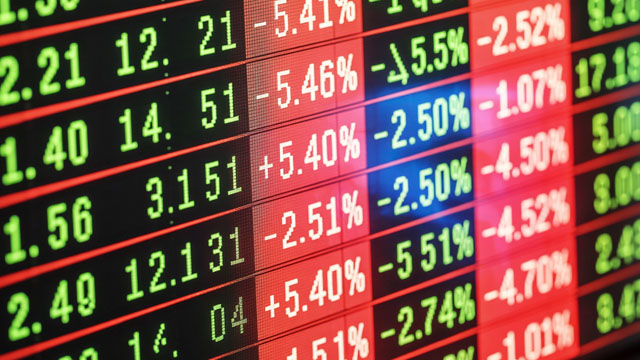
NOTE: @marketminute, Mish's twitter has been hacked. While it gets fixed she will post and respond on @ecomodfam A Sharp Pullback from Strength Gold and silver have both pulled back sharply from their all-time highs.
Max Baecker is "more bullish than ever" on gold as the yellow metal retreats to what he sees as a strong support level. If crude oil's price action continues to climb, he sees it leading to a stagflationary environment that will lower interest rates and incentivize gold buying.

Ernest Hoffman is a Crypto and Market Reporter for Kitco News. He has over 15 years of experience as a writer, editor, broadcaster and producer for media, educational and cultural organizations.
Rising Treasury yields are nearing a key 5% threshold that could tighten financial conditions and trigger broad moves across global markets.

Gold tends to shine in times of rising geopolitical fears, but not this time around, with the shiny yellow metal taking a huge hit, giving back much of the gains from the past year in the middle of the Iran war.

Ernest Hoffman is a Crypto and Market Reporter for Kitco News. He has over 15 years of experience as a writer, editor, broadcaster and producer for media, educational and cultural organizations.
Neils Christensen has a diploma in journalism from Lethbridge College and has more than a decade of reporting experience working for news organizations throughout Canada. His experiences include covering territorial and federal politics in Nunavut, Canada.
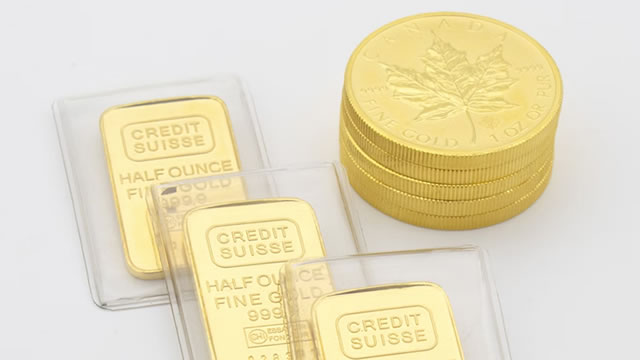
WSJ's Aaron Back explains why investors may still want to hold gold, despite its price declining since the Iran war began.
Oil above $100 and a coordinated hawkish shift from the Fed, ECB, BOE and BOJ revived higher-for-longer fears across currencies, yields and stocks.

Gold prices have tumbled 17.2% since March 2nd while geopolitical tensions in the Middle East continue to simmer with strikes on oil infrastructure becoming an increasing threat should talks fail (see figure 1). Why isn't the safe-haven working?
While popular explanations for gold's decline challenge the yellow metal's status as a safe haven or cast doubt on the continuance of the U.S. dollar debasement trend, the real driver of precious metals' price action since the start if the Iran conflict is the massive recent growth of retail traders in the metals market, according to Robin Brooks, Senior Fellow at the Brookings Institution and former Chief Economist at IIF and Chief FX Strategist at Goldman Sachs.

Gold was on track to snap a five-day losing streak as the price of the precious metal jumped Wednesday.
Gold prices rally, but remain about 17% below January peak. Goldman Sachs stays bullish, sees $5,400 gold on central bank buying despite recent normalization
American Hartford Gold President Max Baecker joins Yahoo Finance's Josh Lipton to explain how macro pressures and a potential AI-driven market pullback could set the stage for a rebound in gold (GC=F) prices. They dive into the current dynamics shaping the gold market and discuss what is currently driving the gold price.
Jeffrey Gundlach, DoubleLine Capital founder and CEO, joins 'Closing Bell' to discuss Gundlach's broad view on equity markets, the commodity complex and much more.

Gold futures kept tumbling Monday despite President Trump's five-day pause on strikes on Iran.

Gold, the world's most enduring store of value, just suffered one of the most violent reversals in modern financial history. In the space of three brutal weeks, the precious metal has shed over 17% of its value, which is its worst weekly performance since 1983.

With gold about $1,000 from highs and silver $50 off its high, David Stryzewski calls the current metal pullback an "opportunity." That opportunity extends to miners as well, with David calling what he considers low P/E ratios for companies.
Neils Christensen has a diploma in journalism from Lethbridge College and has more than a decade of reporting experience working for news organizations throughout Canada. His experiences include covering territorial and federal politics in Nunavut, Canada.
Gold was the highest-returning major asset class of 2025, advancing approximately 64% on the year. Its appreciation was supported by multiple reinforcing factors: elevated geopolitical uncertainty driving safe-haven demand, U.S. dollar weakness, sustained central bank accumulation, and strong inflows into gold-backed ETFs.
"Bloomberg ETF IQ" focuses on the opportunities, risks and current trends tied to the trillions of dollars in the global exchange traded funds industry. Today's guests: Strategas ETF Strategist Todd Sohn, JPMorgan Asset Management Head of US Equity Derivatives Hamilton Reiner, and BlackRock Head of Digital Assets Robert Mitchnick.
A test of the Federal Reserve's mettle is weighing on precious metals.
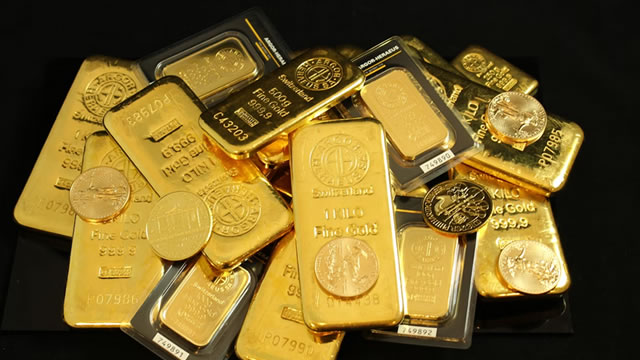
Kevin Green breaks down the New Home Sales report and other economic data from Thursday morning. He discusses how the economic trends could change in upcoming reports due to the U.S.-Iran war.
The price of gold fell after the Federal Reserve kept interest rates steady.

As gold prices (GC=F) rollercoaster up and down in the latest phase of the metal's rally, here's what investors need to know when buying and owning physical gold. This special covers the recent history of gold price fluctuations, the various ways investors can get exposure to gold in their portfolios, and even some fun facts about gold in everyday items that you may not have considered.

Ed Yardeni, president of Yardeni Research, is still bullish on gold. He sees the metal rising to $6,000 an ounce by the end of the year and $10,000 by the end of the decade.