Loading market dashboard

Enterprise Products Partners L.P.
EPDEnergyNYSEUS
Loading disclosure news
News and disclosures filtered by period, publisher, and event group.
Select a headline to open the full news page in the app.
This article is part of our monthly series where we highlight five large-cap, relatively safe, dividend-paying companies offering significant discounts to their historical norms. We go over our filtering process to select just five conservative DGI stocks from more than 7,500 companies that are traded on U.S. exchanges, including OTC networks. In addition to the primary list that yields 4.2%, we present two other groups of five DGI stocks each, from moderate to high yields of up to 8%.

EPD highlights steady fee-based cash flows, 27 straight years of distribution hikes and a multibillion-dollar project backlog.

Zacks.com users have recently been watching Enterprise Products (EPD) quite a bit. Thus, it is worth knowing the facts that could determine the stock's prospects.

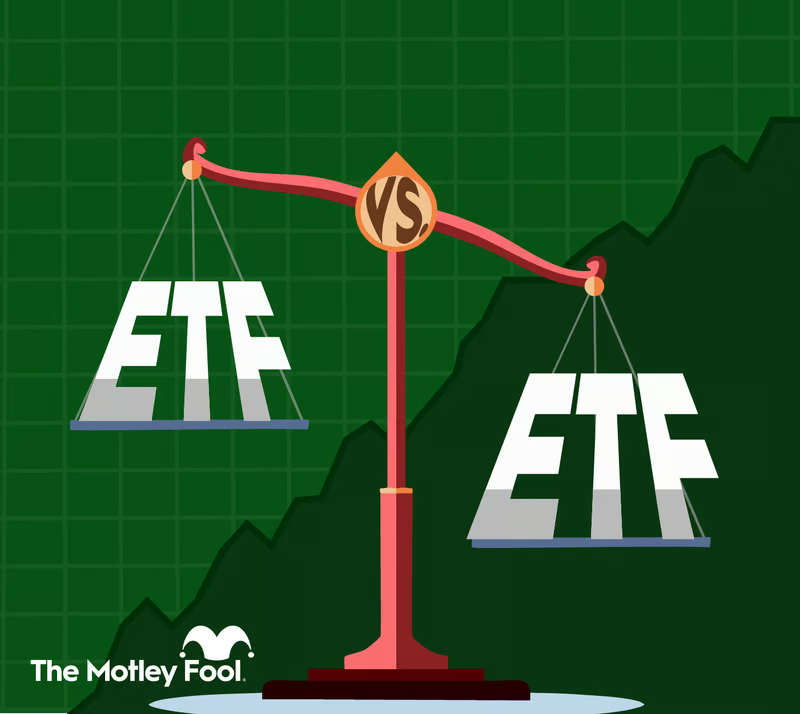
A side-by-side look at two sector funds reveals key differences in risk, income focus, and portfolio composition for energy-minded investors.
The news out of the Middle East has turned for the worse again, which is why a safety-first investment approach is your best bet.

Enterprise Products Partners offers a resilient, fee-based earnings engine, with 80% of gross operating margin insulated from commodity price swings. EPD reported 10% YoY EBITDA growth, a 1.8x distribution coverage ratio, and set 12 operational records, underscoring robust volume-driven growth. With $5.3 billion in fully funded growth projects and a multi-decade demand tailwind from AI data centers and LNG exports, EPD is well-positioned.

The latest trading day saw Enterprise Products Partners (EPD) settling at $37.71, representing a +1.34% change from its previous close.

Enterprise Products bets on Permian growth and booming U.S. feedstock exports, aiming for durable cash flow gains through the decade's end.
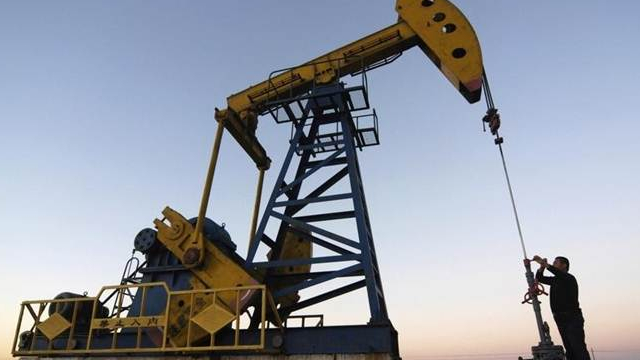
Many on Wall Street argue that oil prices could remain elevated regardless of how the Iran conflict resolves, for several structural reasons.
Income investors should love all three of these high-yield energy stocks.

Enterprise Products (EPD) reported earnings 30 days ago. What's next for the stock?

Midstream stocks continue to look like long-term buys.

Enterprise Products Partners remains a top-tier midstream candidate, combining scale, diversification, and a robust asset base. EPD's cash flows and profitability continue to rise despite recent revenue declines, supported by ongoing capital investments and sector tailwinds. Valuation remains attractive versus peers, with a superior 5.75% yield and industry-leading low net leverage of 3.36, enhancing risk-adjusted returns.

The oil market is in disarray, driven by emotions and news; consider these reliable dividend-paying energy stocks instead.

Enterprise Products continues to expand its midstream network while using stable fee-based cash flows to support growth and balance sheet strength.

These three stocks allow you to generate reliable income.

Global oil inventories fall a little more every day the geopolitical conflict in the Middle East continues. With oil inventories at an 11-year low, a resolution to the conflict won't lead to a swift return to normal.

Enterprise Products Partners, Enbridge, and Energy Transfer are midstream operators with great long-term potential.

These high yields don't come with terrifyingly high risks.

Volatile oil prices make the energy sector exciting, but Enterprise Products Partners is boring.

Holding a high-yield dividend portfolio in a taxable account at the 24% federal bracket means writing the IRS a $14,400 check every year on $60,000 of income that should have been yours.

When investors take a risk-off attitude, stocks with attractive, growing dividends are often their safe-haven option.

BP gains from oil price strength and upstream growth, while Enterprise Products offers stable cash flows through its fee-based midstream model.

EPD's inflation-linked contracts raise fees as prices rise, helping keep pipeline cash flows steady while billions in projects add incremental returns.
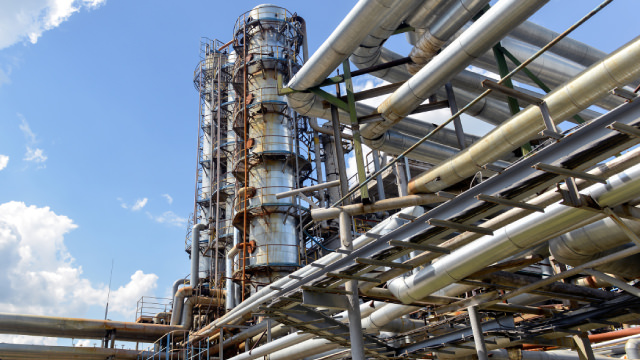
Global oil reserves are being used to offset supply shortages caused by the Middle East conflict. These U.S. "middlemen" continue to transport, store, and process oil like nothing has changed.

At the 24% federal bracket, a portfolio throwing off $42,000 in dividend income hands roughly $10,080 to the IRS every year.

Dividend-growth blue chips like Coca-Cola double income in nine years despite lower starting yields, while high-yield BDCs and REITs with frozen payouts risk delivering less income over a decade than lower-yield growers.

Pulling in $9,800 a month from a portfolio without selling a single share is the kind of math that can completely reshape a retirement plan. That works out to $117,600 a year, roughly four times the median U.S. monthly mortgage payment of about $2,200 for principal and interest. For a 64-year-old couple with a paid-off... A $1.7 Million Portfolio That Quietly Pays $9,800 a Month and Outpaces the Median U.S. Mortgage Payment Twice Over

Enterprise Products (EPD) has received quite a bit of attention from Zacks.com users lately. Therefore, it is wise to be aware of the facts that can impact the stock's prospects.

ABT's EPD unit posts 9% Q1 sales growth as biosimilars and emerging market demand support its long-term expansion plans.
MLPs remain highly attractive for income investors due to defensive cash flows, CPI-linked contracts, and yields averaging ~7.5%. Recent MLP price surges do not signal overvaluation; current valuations are not detached given sector fundamentals and macro risks. MLPs have deleveraged, consolidated, and now benefit from higher inflation expectations and a flight-to-quality dynamic.

Iran and the United States continue to trade ceasefire proposals, and a deal could quickly shift the oil market narrative.

A 64-year-old retiree with $475,000 who wants to generate $2,800 per month, or $33,600 annually, from dividends alone needs a portfolio yield of roughly 7%. That is simply the arithmetic. With the S&P 500 yielding well under 2%, a traditional index-fund portfolio falls far short of producing that level of income without selling shares. The... A $475,000 Portfolio That Quietly Pays $2,800 a Month From Just Two Sectors Most Investors Ignore

As Wall Street pours billions into artificial intelligence (AI) infrastructure, Oxbow Advisors founder Ted Oakley says investors are ignoring the massive energy and commodity demand needed to power the AI boom — creating an opportunity in beaten-down energy stocks.

EPD's $5.3B project pipeline and rising global LPG demand position the partnership to expand hydrocarbon transport and export capacity.

These pipeline companies should have plenty of fuel to continue increasing their high-yielding payouts in the coming years.

On May 19, 2026, we delve into the DCF analysis for Enterprise Products Partners LP (EPD), a company that has shown notable price performance over the past year
Enterprise Products Partners L.P. (NYSE: EPD) announced today that it will participate in meetings with investors at the following conferences: EIC Energy I

HOUSTON--(BUSINESS WIRE)--Enterprise Products Partners L.P. (NYSE: EPD) announced today that it will participate in meetings with investors at the following conferences: EIC Energy Infrastructure CEO & Investor Conference in Aventura, Florida, May 18-20, 2026; Stifel Cross Sector 1x1 Conference in Boston, June 2, 2026; and JPMorgan Energy, Power, Renewables & Mining Conference in New York City, June 23-24, 2026. The latest investor deck that may be used to facilitate the investor meetin.

There are several different paths to retiring on dividends. However, they all have major drawbacks. I share an approach that I have honed over time that seeks to bring out the best of each strategy and minimize its deficiencies.

Enbridge, Enterprise Products Partners, Energy Transfer, and MPXL all pay dividends currently yielding above 5%.

These dividend stocks are anything but boring.

Tread with caution if you are only looking at the energy sector because of the geopolitical conflict in the Middle East and high oil prices.

EPD nears a 52-week high, but trades at an EV/EBITDA discount as inflation-protected contracts support stable, fee-based cash flows.

On May 13, 2026, we present a discounted cash flow (DCF) analysis for Enterprise Products Partners LP (EPD). The stock has shown a strong price performance, wit
Pulling $5,000 a month from a portfolio is a common benchmark for early retirees who want a middle-class income floor without relying on full-time work. It can help cover property taxes, insurance, healthcare premiums, groceries, utilities, and the basics of a comfortable middle-class life in many parts of the country. Building it without leaning on a... The 3-Bucket Income Portfolio: How to Build $5,000 a Month From Dividends, Bonds, and REITs

You don't need to be an economist to determine that the path of least resistance for inflation will be higher as 2026 rolls on.

If you own the InfraCap MLP ETF (NYSEARCA:AMZA) for income, the question is simple: can the fund keep cutting those $0.34 monthly checks?

Given the lofty price of oil, energy investors should probably think about what happens when oil prices fall.

Not having a job is the dream part. A $500,000 portfolio that quietly pays you about $2,680 a month means money shows up without a commute, a boss, a time clock, or a Monday morning performance review. At $32,160 a year, that income can cover property taxes and insurance, groceries, healthcare supplements, utilities, and modest... A $500,000 Portfolio That Quietly Pays You $2,680 a Month, No Job Required

While the top- and bottom-line numbers for Enterprise Products (EPD) give a sense of how the business performed in the quarter ended March 2026, it could be worth looking at how some of its key metrics compare to Wall Street estimates and year-ago values.

On May 08, 2026, we present a detailed DCF analysis for Enterprise Products Partners LP (EPD). The stock has shown a year-to-date increase of 21.3% and a one-ye
A $500,000 nest egg looks simple on paper until retirement turns it into a machine that has to produce income for decades. One path harvests dividends and tries to leave the shares intact. The other follows the 4% rule, selling pieces of the portfolio each year to fund withdrawals. Same starting capital, very different ride.... Dividends vs. the 4% Rule: What Happens to a $500,000 Portfolio Over 20 Years

An $80,000 annual income sits at a meaningful threshold. It roughly matches the combined Social Security benefit. It is higher than the typical individual paycheck, but close enough to the middle-class mainstream that replacing it with portfolio income is a practical retirement question rather than a fantasy exercise. The question this piece answers is concrete:... How Much Do You Really Need Invested to Replace an $80,000 Salary With Dividends?

Zacks.com users have recently been watching Enterprise Products (EPD) quite a bit. Thus, it is worth knowing the facts that could determine the stock's prospects.

The world is currently facing a serious oil supply shortage due to the closure of the Strait of Hormuz.

Enterprise Products Partners just set 12 new volume records in a single quarter, and its EBITDA surged 10% year-over-year. We look at why the best quarters may still be ahead for EPD. However, I do not view it as a buy just yet. In this article, I detail why.
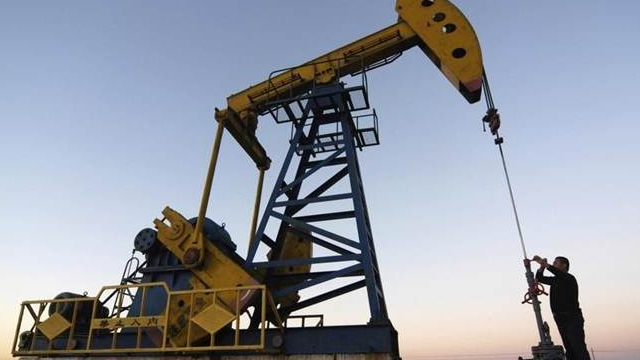
Enterprise Products Partners is downgraded to Hold as growth catalysts are now fully priced in. EPD's Q1 2026 earnings report revealed strong near- and long-term growth drivers, including increased capex and a robust project pipeline. The current yield has compressed to 5.66%, near the lowest levels in a decade, reflecting heightened valuation risk.

The average retired worker collects about $2,071 a month from Social Security 2026, or roughly $24,852 a year. That sets the benchmark. The real question is how much capital, invested at what yield, can replace or modestly exceed that income. With $360,000 invested at the right blended yield, you can beat that monthly check while... A $360,000 Portfolio That Quietly Pays You More Than the Average Social Security Check

The average U.S. public school teacher earns roughly $74,500 a year for about 180 instructional days of work, according to NEA data. A $1.25 million dividend portfolio, properly constructed, can generate roughly the same paycheck while the investor does nothing. Getting there is straightforward. Managing the risk at each yield level is the harder part.... A $1.25 Million Dividend Portfolio That Pays More Than the Average Teacher Earns in a Year