Loading market dashboard

Xtrackers MSCI EAFE Hedged Equity ETF
DBEFFinancial ServicesAMEXUS
Loading disclosure news
News and disclosures filtered by period, publisher, and event group.
Select a headline to open the full news page in the app.
It is time for Europe to give up its long-standing political resistance to joint debt issuance, as a large-scale safe asset would bolster the bloc's sovereignty and stability, Cypriot central bank chief Christodoulos Patsalides said on Sunday.
U.S. inflation data in the coming week will be closely watched as investors gauge how likely it is that the Federal Reserve will raise interest rates this year.
Every few years, the investment community rediscovers the case for international equities. A string of outperformance relative to the S&P 500 generates a wave of allocation recommendations, money flows in, and then — historically, more often than not — U.S. exceptionalism reasserts itself and the rotation reverses.

European shares were largely steady at the open on Thursday as investors remained cautious amid ongoing developments in the Middle East. Market sentiment was also influenced by concerns surrounding the financial services sector, while company-specific updates drove notable moves in individual stocks.

The EU has unveiled its tech sovereignty package which if adopted, could direct public money towards products that contribute to European independence, cut red tape for data centers and boost research and innovation. Brando Benifei, member of the European Parliament and co-rapporteur on the AI Act joins to discuss.

The 27-nation European Union outlined how it hopes to expand the region's data centers, semiconductors and cloud computing capabilities.
The European Union will develop minimum energy-efficiency standards for data centres, it said on Wednesday, as concerns grow over their rapidly rising power use.
The European Commission proposed new laws on Wednesday to boost domestic cloud, AI and semiconductor industries, aiming to cut reliance on U.S. Big Tech in a move that could ratchet up transatlantic tensions.
European automotive, construction, metals, chemicals and transport sectors could lose up to 1.3 million jobs this year as a result of a surge in energy prices caused by the U.S.-Iran conflict, Labour Commissioner Roxana Minzatu said on Wednesday. "Due to the war in the Middle East, up to 1.3 million jobs are at risk and we are talking about jobs in energy-intensive industry, particularly," Minzatu told a news conference.

Rick Gardner of of RGA Investments says higher defense spending commitments across Europe could support the region's defense stocks, which remain relatively cheaper than U.S. peers. He also sees upside for U.S. LNG exporters, producers and refiners if Europe increasingly looks beyond the Gulf region for energy supplies.

The UK's blue-chip index advanced on Tuesday, supported by gains in mining-related shares as base metal prices strengthened, while energy stocks came under pressure following a decline in crude oil. Broader sentiment was also influenced by geopolitical developments, including renewed expectations of progress in US–Iran talks.

European natural-gas prices fell after President Trump said talks with Iran were continuing, though losses were limited by uncertainty about whether they'll reach an agreement.

European shares opened lower on Monday as escalating tensions in the Middle East weighed on investor sentiment, while markets also reacted to corporate developments involving British airline easyJet and Amsterdam-listed Universal Music Group. The pan-European STOXX 600 index was down 0.1% at 0709 GMT, extending the subdued mood seen at the end of the previous week.
Market expectations that the European Central Bank will hike interest rates this year have already contributed to tighter financial and lending conditions. The "transmission of tighter policy is already underway," Goldman Sachs noted.

The European Central Bank's decision to keep rates unchanged last month was a close call for some policymakers as signs of persistently high inflation made it hard to look past the energy-driven shock, the accounts of the meeting showed on Thursday.
Selling-price expectations eased across all business sectors, interrupting the steep upward trend seen in the last two months.

Share markets across Asia fell on Thursday after reports of fresh US military strikes on Iran and missile attacks linked to Kuwait unsettled investors and weakened optimism surrounding a possible peace agreement in the Middle East. Oil prices surged while Treasury yields climbed as investors reacted to escalating tensions and growing concerns over inflation ahead of key US economic data.

An EU plan to gradually reduce the number of free CO2 permits given to industries has hit resistance from six governments that have demanded looser rules to help firms cope with the energy price impact of the Iran war, a document seen by Reuters showed.
The euro zone is not facing systemic risk from the recent turbulence in private credit markets but a few pockets of the financial system are exposed and some tension may already be visible, the European Central Bank said in a report on Tuesday.

European stocks were set to open lower Tuesday, as traders watched developments in the Middle East and Ukraine.
European natural-gas prices slid on signs that the U.S. and Iran were moving closer to a deal to reopen the Strait of Hormuz.

European Union countries will face large bills for defence, energy and pensions in the next 15 years, the International Monetary Fund told EU finance ministers on Saturday, suggesting a mix of reforms, consolidation and joint borrowing as a way to manage that.

European shares moved higher on Friday as investors responded positively to signs of progress in peace talks between the United States and Iran, despite both sides continuing to disagree on several major issues. The pan-European STOXX 600 index rose 0.5% to 623.79 points by 0703 GMT and was on track to close the week with gains.

Europe-focused funds shed more than $1.5 billion over the past week alone, marking a 5th straight week of sustained withdrawals. With the STOXX Europe 600 trading at around 13.5 times earnings (forward), and failing to attract buyers despite a historical discount to US markets, investors are reassessing the region's equity risk premium.
"Europe doesn't realize exactly how dangerous it is to just rely on the American infrastructure," Bouygues CEO Olivier Roussat told CNBC on Thursday. Elon Musk's Starlink currently dominates the global satellite internet service, and its parent company SpaceX is planning to list on Nasdaq in what could be one of the biggest IPO ever.

The case for a European Central Bank rate hike in June is nearly sealed but the bank is likely to be noncommittal about any further move, looking to temper bets for a quick follow-up step in July, four sources told Reuters.
Contrary to what some Trump officials believe, Europe remains critical to our defense and, indeed, to securing the Free World. Therefore, the sudden, unexpected cancellation of a U.S. Army armor brigade's deployment in Poland raises a deeply disturbing question: Is Washington retreating from Europe?
Fixed income continues to sell off across Europe which focuses investors' minds on UK April inflation. Crude prices slip on news that several tankers were able to exit the Strait of Hormuz.

The European Union has struck a provisional agreement to implement a trade pact with the U.S. It includes a safeguard mechanism that would let Brussels suspend tariff reductions in the event that U.S. imports harm European industry.

Demand for electric vehicles in Europe has surged as high fuel prices linked to the Iran war propel sales of new and second-hand EVs, data exclusively shared with Reuters shows, providing a much-needed boost to the auto industry.

The move likely reflects an increase in the cost of imported energy as the conflict in the Middle East disrupted supplies.

European shares moved slightly higher on Tuesday after investors reacted positively to signs of easing geopolitical tensions between the United States and Iran. Markets also assessed corporate developments, including Standard Chartered's large-scale restructuring plans tied to artificial intelligence adoption.

We are live in Paris at the G7 finance ministers' meeting where European Commissioner Valdis Dombrovskis tells us that Europe is facing a stagflationary shock amid the energy crisis while French finance minister Roland Lescure says lawmakers need to work to reassure bond markets. Crude prices fall slightly after U.S. President Trump says he postponed fresh strikes on Iran, citing diplomatic progress on ending the conflict with Iran.

European stocks are expected to open in mixed territory on Tuesday as traders assess the geopolitical landscape.

Ryanair is putting a bumper bonus on the table for its CEO, Michael O'Leary. O'Leary could get share options worth around $300 million if he achieves certain targets.

European shares moved lower on Monday as rising oil prices and continued bond sell-offs heightened inflation concerns, while the absence of any breakthrough between the United States and Iran kept investors cautious. The pan-European STOXX 600 index slipped 0.7% to 602.52 points as of 0703 GMT, extending losses after ending the previous week in negative territory.
Asian markets fell sharply on Monday after drone strikes in the Gulf reportedly triggered a fire at a nuclear power facility in the UAE, lifting oil prices and reigniting fears over inflation, tighter monetary policy and slower global growth. The renewed geopolitical tensions pushed investors away from equities and into defensive positions, while global bond yields climbed to multi-month highs amid concerns that elevated energy prices could delay central bank easing and even revive the prospect of further interest rate hikes.
European blue-chip companies are on course to deliver their strongest earnings growth since the fourth quarter of 2022, according to the latest LSEG I/B/E/S data released on Thursday. However, revenues are still expected to decline despite the strong profit performance.

Output rose 0.2% on month, though the war in the Middle East is expected to increasingly weigh on manufacturers as energy costs and supply disruptions mount.

Japanese investors became net sellers of foreign stocks in April for the first time in four months, as concerns over rising energy costs linked to the Iran war and broader inflation risks weighed on sentiment toward overseas equities. Data released by Japan's Ministry of Finance on Wednesday showed that investors sold a net 636.4 billion yen ($4.04 billion) worth of foreign stocks during the month.

European shares fell sharply on Tuesday as fading hopes of a peace deal between the United States and Iran pushed oil prices higher and weighed on investor sentiment across the region. Markets remained under pressure after US President Donald Trump said the ceasefire with Iran was “on life support.
The prolonged conflict in the Middle East is beginning to weigh heavily on global markets, affecting currencies, fuel prices, airlines, and bond markets as investors assess the broader economic implications. From sharp declines in Asian currencies to the collapse of a low-cost US airline, the economic effects of the conflict are spreading across regions and sectors.

KBC reported a first-quarter profit below market expectations on Tuesday, depressed by higher provisions and reserves set aside due to geopolitical challenges, as the Belgian bank joined European peers boosting their buffers amid the Iran war.

European natural-gas prices rose as stalled U.S.-Iran talks fueled concerns over prolonged disruptions to global energy markets.

European stocks are expected to open in mixed territory on Monday as investors digest the latest in U.S.-Iran peace negotiations.

Europe's co-located renewable power and battery capacity is expected to surge more than 450% by 2030, with Germany the most attractive country to build projects, a report by Aurora Energy Research showed on Monday.

The European Central Bank's outgoing Vice President Luis de Guindos urged colleagues, in an interview published on Monday, to be prudent when deciding on an expected interest rate hike next month as growth was set to weaken.

The European Commission is considering proposing rules that would restrict the use of U.S. cloud platforms to process sensitive government data across EU countries, officials told CNBC. The Commission — the EU's executive branch — is expected to present its "Tech Sovereignty Package" on May 27.

President Emmanuel Macron plans to nominate his former chief of staff, Emmanuel Moulin, as France's next central bank governor, the Elysee said on Tuesday, seizing an early vacancy to install a trusted ally ahead of a 2027 election the far right could win.

Europe's AI regulations should be reduced and simplified, chief executives of seven of Europe's top technology firms including Christophe Fouquet of the biggest, computer chip equipment maker ASML , said in an opinion piece published on Tuesday.

The European Union needs its banks to be bigger if they are to compete with their counterparts in the United States and China, the chairman of the euro zone's finance ministers' group said on Tuesday.

European shares moved slightly lower on Tuesday as investors remained cautious following fresh attacks involving the United States and Iran in Gulf waters. Elevated global oil prices also added to market uncertainty.

European stocks are expected to open lower on Tuesday as investors digest the latest developments in the Iran war.

The longer the Iran war persists, the greater the risk that inflation will remain elevated if monetary policy fails to act, Bundesbank President Joachim Nagel said.

The meeting, planned for Tuesday, comes after Trump said he would said he would raise tariffs on cars from the bloc.
European markets are expected to start the new trading week in negative territory, as investors watched Middle East developments.
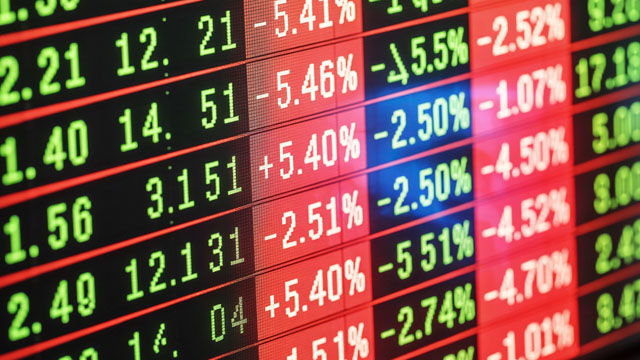
Both the ECB and the BoE decided to hold interest rates steady but warn that a June hike could be on the cards should inflation pressures connected to the Iran crisis escalate. The S&P 500 and Nasdaq notch their strongest month for six years as investors look beyond the Middle East and bet on Big Tech's A.I.

The European Central Bank kept interest rates on hold on Thursday and warned that the war in Iran was fuelling an energy-led rise in euro zone inflation while taking a toll on economic activity.

The euro zone economy recorded weak growth in the first quarter of the year, offering an early indication of economic conditions following the onset of the Iran conflict. A preliminary estimate released on Thursday showed that economic activity in the bloc expanded only marginally, reflecting growing pressures from geopolitical tensions and trade disruptions.

EU regulators will seek feedback starting Thursday from interested parties to the first proposal to overhaul merger rules in more than two decades, which has raised expectations among companies for looser rules.